24/7 water damage dispatch for Hudson and Saint Croix County
Lower level water has many sources

Basement Flood Cleanup in New Richmond, WI

A basement puddle may come from a supply pipe, drainage, snowmelt or a sanitary backup. Careful source confirmation determines whether the work needs ordinary extraction or stronger contamination controls throughout the affected area.

(888) 399-5795Identify the basement source
Water category established Standing depth reduced Lower walls and floors tested
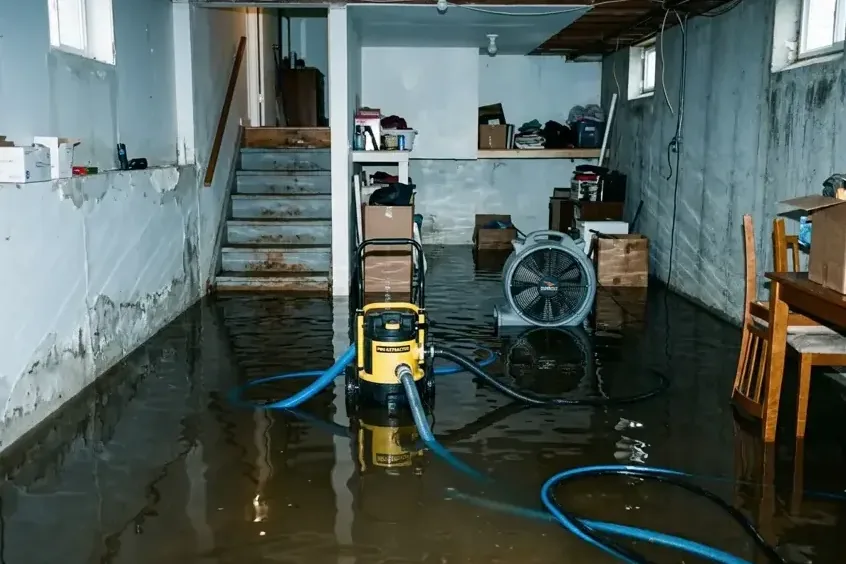
Standing water covers a basement floor around hoses and drying machines
Right now

First steps for basement flood cleanup in New Richmond

  1. 1

    Keep clear of the lower level

    Do not enter when sewage, electrical exposure, shifting contents or structural damage may be present.

  2. 2

    Report a sanitary backup

    Check New Richmond Utilities contact instructions before arranging ordinary plumbing work.

  3. 3

    Photograph from a safe position

    Capture the water line, debris and rooms involved without stepping into the affected area.

  4. 4

    Request source based extraction

    Have the category and entry route established before pumping, sweeping or moving wet porous items.

Basement Flood Cleanup: the trade facts

Possible originsPlumbing, runoff, snowmelt or wastewater.
Safety checkCheck electrical and structural concerns first.
Material focusInspect floor edges and wall bottoms.
ProofRecord progress across retained assemblies.

The word flooded describes the condition, not the source. Before pumps begin, technicians look for plumbing flow, outside entry, drain backup and weather connections. That classification influences protective equipment, containment, cleaning and what porous material may remain.

Turn the water edge into a source map

Standing depth is recorded along with staining, debris and the rooms involved. When water is still rising, source control takes priority. Wet electrical equipment, unstable stored items and weakened ceiling material are kept outside the safe work route.

Local geography cannot replace that inspection. Basement work along the Willow River corridor, County Road A and Downtown New Richmond begins with checks of plumbing, floor drains and exterior entry points. The crew bases the conclusion on entry points, current drainage, plumbing findings and material evidence.

Typical cost ranges

What does basement flood cleanup cost in New Richmond, WI?

Basement flood restoration may range from $1,600 to $24,000. Source category, standing volume, wet finishes, stored contents and equipment access determine the applicable inspected scope.

Contained lower level area

$1,600 to $7,800

  • single pumping zone
  • wall edge testing
  • focused drying plan

Several basement materials

$7,800 to $15,900

  • floor and wall involvement
  • porous material removal
  • multiple readings documented

Extensive contaminated loss

$15,900 to $24,000

  • controlled wastewater area
  • broader content and finish handling
  • detailed cleaning verification notes

Ranges are typical figures, not a quote. The category of water, the square footage, the material class and how fast drying started move the number most. The water damage cost calculator gives a closer range.

Step by step

How basement flood cleanup is handled in New Richmond

The tech who does the walkthrough finds the source and maps the moisture before equipment goes down, and the drying team keeps it running until the readings say dry.

  1. 1

    Determine the origin

    Inspection separates plumbing, drainage, snowmelt, runoff and sanitary backup paths.

  2. 2

    Create safe work access

    Electrical concerns, contents and contamination shape the extraction route.

  3. 3

    Remove water and wet debris

    Pumping, extraction and controlled material decisions reduce the immediate load.

  4. 4

    Measure walls and floor layers

    Readings confirm drying progress beyond the former standing water line. Stored goods and shelving are moved only through a clean route so perimeter materials remain accessible.

Match pumping and removal to contamination

Extraction reduces the volume in planned stages appropriate to the structure and equipment access. Clean plumbing water may allow more material to be retained. Outside water and sewage require stricter controls. Carpet pad, wallboard, insulation or stored porous goods are evaluated according to contact, condition and the possibility of safe cleaning.

New Richmond Utilities publishes sanitary sewer backup information and asks customers to contact the utility before a plumber or other service professional. A property owner facing a backup should assessment that instructions. The restoration crew manages contaminated interiors but does not determine utility responsibility or reimbursement.

Check the lower wall, not only the floor

Water can wick into wallboard, base trim and insulation above the visible line. Moisture readings outline those vertical effects and reveal spread beneath finished flooring. After necessary removal and cleaning, dehumidifiers manage vapor while airflow reaches surfaces that can safely remain exposed.

Sewage backup cleanup describes Category 3 handling. For clean or appropriately controlled water, structural drying explains how retained framing and floor layers are monitored. Source correction and drainage repairs remain outside restoration drying.

Leave a record for repair decisions

Final notes can show the initial water line, source category, materials removed, areas cleaned and readings achieved. That record helps the owner distinguish completed water recovery from plumbing, drainage or finish repairs that still need attention.

Stored belongings create another boundary that deserves separate attention. Cardboard, upholstered items and unfinished wood respond differently to clean plumbing water, surface runoff or sewage. Technicians document contact and condition before an owner decides what can be cleaned, relocated or discarded. Shelving and wall surfaces behind stored goods are then included in the moisture map. Keeping contents decisions apart from structural drying prevents a dry open floor from hiding damp material along the perimeter. It also leaves clear access for continued monitoring near walls and utility penetrations.

New Richmond, WI service area
Service area

Basement flood cleanup across New Richmond and nearby towns

Basement cleanup is available across ZIP code 54017, including Downtown New Richmond, County Road A, the Willow River corridor, Knowles Avenue and areas around Fourth Street.

The same service nearby: basement flood cleanup in Hudson, Stillwater, River Falls.

Water damage restoration in New Richmond · every town covered

Questions and answers

Basement Flood Cleanup questions in New Richmond, WI

Should a flooded basement be entered?

Not when water may contact electrical equipment, sewage is present or the structure appears unstable. Keep access restricted until hazards are evaluated.

Why does the source matter before pumping?

Plumbing water, outside water and sewage require different controls. Classification directs worker protection, cleaning and decisions about porous finishes.

What should happen after a sewer backup?

Check New Richmond Utilities instructions and contact the utility as directed. Keep people away from contamination while restoration and source correction are coordinated separately.

Can wallboard wick water upward?

Yes. Moisture can rise above the visible water line in porous material. Readings identify the actual height and help define controlled removal.

Are all basement floors treated the same?

No. The finish, underlying layers, contamination and physical condition matter. The crew tests the specific assembly instead of assuming one foundation or floor type.

How is the basement declared dry?

Technicians compare repeat readings from retained materials with a suitable dry reference. The final check includes readings beneath finishes and along previously wet edges.

What happens to stored items near the water line?

Each item is considered by material, contact and contamination. Dry belongings can move to protected space, while affected porous goods need documentation and a cleaning or disposal decision before the crew can inspect shelving, wall edges and flooring behind them.

Still dealing with it?

Lower level water needs a source decision before cleanup methods are selected. That first distinction protects dry areas and directs every material choice.

(888) 399-5795Start with the source category
24/7 emergency dispatch

Arrange a local basement inspection.

Technicians document the water line, recover standing liquid and track retained floors, walls and framing through the drying process.

(888) 399-5795Request basement flood cleanup
Call (888) 399-5795 · 24/7