24/7 water damage dispatch for Hudson and Saint Croix County
24/7 measured mitigation

Emergency Water Extraction in Hudson, WI

Burst pipes, appliance failures, storms and overflows can move through floors, walls and lower levels. The response team uses truck mounted extraction, portable extractors and hardwood drying mats and tracks the structure to a measured dry goal.

(888) 399-5795Start emergency water extraction in Hudson
24/7 active water dispatch IICRC S500 drying Daily material readings
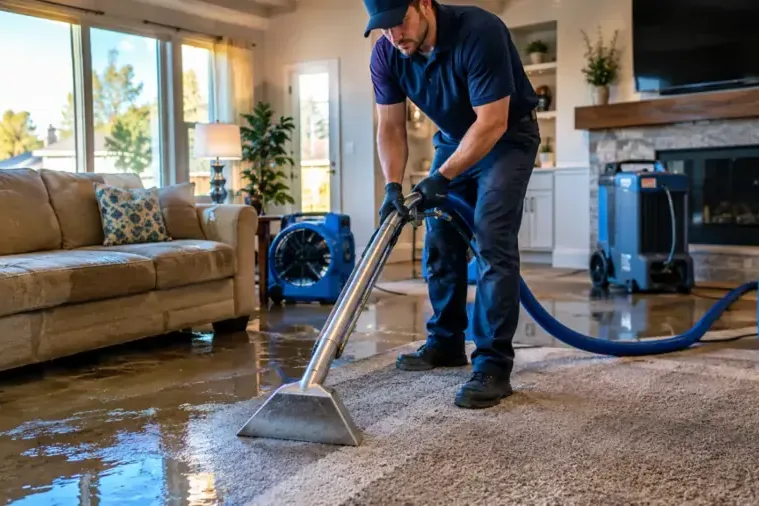
Technician uses an extraction wand on a water-soaked living room rug
Right now

First steps for emergency water extraction in Hudson

  1. 1

    Stop the source

    Address burst pipes, appliance failures, storms and overflows when it is safe and keep clear of wet electrical fixtures.

  2. 2

    Protect people

    Keep children, pets and occupants away from wet rooms, especially when contamination is possible.

  3. 3

    Record conditions

    Photograph the source, the water edge and affected contents before anything moves.

  4. 4

    Call for mitigation

    Use 24/7 dispatch so extraction and moisture mapping start before the spread grows.

Emergency Water Extraction: the trade facts

Water categoryCategory 1 to 3, based on the source
Drying standardIICRC S500
Core equipmentMoisture meters and dehumidification
Dispatch24/7 for active water

Emergency Water Extraction starts with the source and the water category. In the service area, water moves quickly through older floors in Old Town and commercial spaces Downtown. The response team maps wet materials around Downtown Hudson, Old Town and The Hill before removal or equipment placement. That local check matters because the St. Croix River valley, the higher bluffs and mixed building eras do not dry the same way.

What the emergency water extraction team checks first

The walkthrough confirms whether burst pipes, appliance failures, storms and overflows caused the loss. The tech checks power safety, stops accessible water and follows the spread with thermal imaging and pinless or penetrating meters. Baseboards, wall bottoms, subfloor, insulation and the room below get separate readings. Birkmose Park and the Willow River are useful local reference points, but no property receives a flood classification without an address specific map check.

  • The crew identifies the source before extraction begins and records the visible conditions.
  • The extraction crew separates clean water from gray or Category 3 water because material decisions change with contamination.
  • The drying team checks concealed layers instead of assuming that a dry surface means the assembly is dry.
  • The claim file records moisture readings, temperature, humidity, photos, category and class.
Typical cost ranges

What does emergency water extraction cost in Hudson, WI?

In Hudson, WI, emergency water extraction typically runs $700 to $6,200. The category, affected area, material class and time wet determine where the work falls in that range.

Contained area

$700 to $3,200

  • Source and safety check
  • Targeted extraction
  • Daily readings

Several materials

$3,200 to $4,700

  • Controlled material removal
  • Multiple drying zones
  • Claim documentation

Large or contaminated loss

$4,700 to $6,200

  • Containment and PPE
  • High volume extraction
  • Extended structural drying

Ranges are typical figures, not a quote. The category of water, the square footage, the material class and how fast drying started move the number most. The Hudson water damage cost calculator gives a closer range.

Step by step

How emergency water extraction is handled in Hudson

The tech who does the walkthrough finds the source and maps the moisture before equipment goes down, and the drying team keeps it running until the readings say dry.

  1. 1

    Inspect and classify

    The walkthrough tech identifies the source, category and class, then maps each wet material before work starts.

  2. 2

    Extract and contain

    The extraction crew removes liquid water and isolates contaminated or occupied zones before evaporation begins.

  3. 3

    Dry by material

    The drying team balances air movement and dehumidification for framing, drywall, subfloor and finish materials.

  4. 4

    Verify and document

    Daily readings continue until materials reach the dry goal and the final record shows the trend.

How emergency water extraction is removed and dried

The work uses truck mounted extraction, portable extractors and hardwood drying mats. Liquid removal shortens the amount of water that equipment must evaporate. Liquid extraction comes before evaporation because removing water as liquid shortens the drying load. Air movers then lift moisture from wet surfaces while dehumidifiers capture it from the air. The crew adjusts equipment from daily readings rather than leaving a fixed setup untouched.

Materials usually count as dry when they read within 2 to 4 points of a dry reference material in the same building. Household leak awareness and outside water safety both support preparation. The restoration scope still comes from the measured conditions documented at the property.

Material decisions after emergency water extraction

The mitigation team preserves clean, stable material when readings show it can dry safely. Wet pad, collapsed insulation and material touched by Category 3 water come out. Hardwood, plaster and dense framing may need specialty drying and a longer reading cycle. The crew documents pre removal conditions so the claim file explains why each material stayed or left.

  • Category 1 material may dry in place when work starts early and the assembly stays clean.
  • Category 2 material receives cleaning and a closer decision about pad, insulation and composite products.
  • Category 3 porous material is removed with containment and worker PPE.
  • Equipment remains until material readings reach the recorded goal.

Local documentation for affected properties

The final record ties the loss to specific rooms and materials rather than a generic water event. Downtown Hudson commercial rooms, Old Town homes and properties near Interstate 94 may have different access, finish layers and operating needs. The crew records those differences, the St. Croix River or Willow River conditions when relevant, and the drying trend for each monitored point.

Hudson, WI service area
Service area

Emergency water extraction across Hudson and Saint Croix County

The Hudson restoration crew covers ZIP 54016, from Birkmose Park and Old Town to Downtown Hudson, North Hudson, The Hill and properties near Interstate 94 and State Highway 35.

Nearby coverage reaches Stillwater, River Falls, Maplewood, New Richmond and Vadnais Heights.

See every Hudson neighborhood and nearby town covered

Questions and answers

Emergency Water Extraction questions in Hudson, WI

What should happen first during emergency water extraction?

Stop the source when it is safe, switch off power to wet rooms from a dry panel, photograph the conditions and call 24/7 dispatch. The crew starts with safety and liquid extraction.

How is the water category set for emergency water extraction?

The source and contact history set the category. For this service, the starting point is category 1 to 3, based on the source. Time and contact with contamination can change the decision.

What equipment handles emergency water extraction?

The typical setup includes truck mounted extraction, portable extractors and hardwood drying mats. The class of loss and daily readings determine the number and placement of units.

How long does emergency water extraction take to dry?

A contained clean water loss often dries in three to five days. Dense wood, plaster, concrete and concealed cavities take longer, and readings determine the finish date.

Does drywall always come out after emergency water extraction?

No. Clean, stable drywall may dry in place when the cavity is accessible. Category 3 contact, loss of strength or trapped moisture can require a controlled opening.

Can insurance cover emergency water extraction?

Sudden and accidental water discharge is often treated differently from gradual seepage or rising flood water. Coverage depends on the policy, so the property owner should check with the insurer.

What does the emergency water extraction claim file include?

The file can include a source note, initial moisture map, daily readings, psychrometric logs, timestamped photos, category, class and a line item mitigation scope.

Still dealing with it?

Emergency Water Extraction needs a measured response.

(888) 399-5795Send Hudson help for emergency water extraction
24/7 emergency dispatch

Emergency Water Extraction in Hudson? Start the dry-out.

Liquid removal shortens the amount of water that equipment must evaporate. The response team works 24/7 and documents the readings from the first walkthrough.

(888) 399-5795Call for Hudson emergency water extraction
Call (888) 399-5795 · 24/7