24/7 water damage dispatch for Hudson and Saint Croix County
Dry is a measured condition

Structural Drying and Dehumidification in New Richmond, WI

Surfaces can feel dry while framing, wall material or floor layers still hold moisture. A complete drying plan uses baseline readings, equipment adjustments and clearly documented targets for each retained building assembly.

(888) 399-5795Set a measured drying goal
Dry references established Equipment response recorded Final readings compared
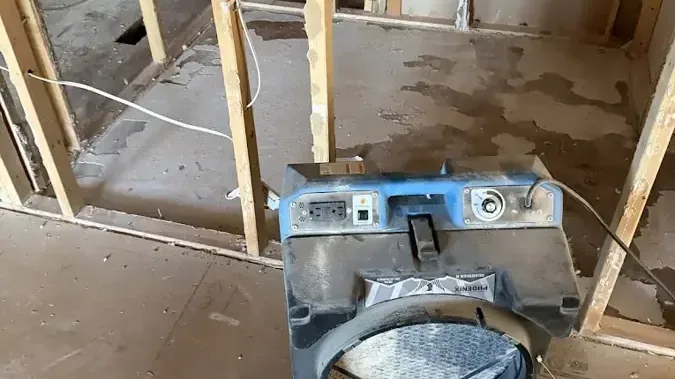
Large blue drying machine faces exposed wall framing and damp flooring
Right now

First steps for structural drying and dehumidification in New Richmond

  1. 1

    Confirm extraction is complete

    Recover accessible liquid and resolve ongoing entry before relying on evaporation equipment.

  2. 2

    Keep the layout intact

    Do not move air movers or block dehumidifier airflow without coordinating with the drying technician.

  3. 3

    Report new water signs

    Share any fresh staining, dripping or odor change that could indicate continuing entry or hidden spread.

  4. 4

    Check the final record

    Compare starting, progress and completion readings for every retained material zone in the documented scope.

Structural Drying and Dehumidification: the trade facts

Starting pointMap materials after liquid extraction.
ComparisonSelect an appropriate dry reference.
AdjustmentMove equipment as readings change.
CompletionDocument every retained zone.

Drying is not a fixed collection of fans. It is a sequence of measurements, access decisions and equipment changes tied to specific materials. The crew begins after recoverable liquid is removed and the water category permits safe airflow.

Build the plan from a material map

Technicians measure the affected framing, wall sections, flooring and other retained layers. Readings from a suitable unaffected area provide context. The plan identifies which zones need evaporation support, vapor removal or additional access to release trapped moisture.

Buildings around Northwood Technical College, Downtown New Richmond and the Willow River corridor may contain different assemblies. Those places establish local orientation, not a shared drying standard. Each property uses its own material readings and appropriate reference.

Typical cost ranges

What does structural drying and dehumidification cost in New Richmond, WI?

Structural drying may range from $1,100 to $15,500. Wet material depth, number of equipment zones, access needs and monitoring duration determine the appropriate inspected tier.

Focused drying zone

$1,100 to $5,200

  • limited material moisture map
  • one equipment arrangement
  • repeat readings documented

Several connected assemblies

$5,200 to $10,400

  • floor wall and framing checks
  • equipment repositioning visits
  • multiple dry targets tracked

Extensive structural moisture

$10,400 to $15,500

  • broad access planning
  • several contained drying zones
  • comprehensive completion record

Ranges are typical figures, not a quote. The category of water, the square footage, the material class and how fast drying started move the number most. The water damage cost calculator gives a closer range.

Step by step

How structural drying and dehumidification is handled in New Richmond

The tech who does the walkthrough finds the source and maps the moisture before equipment goes down, and the drying team keeps it running until the readings say dry.

  1. 1

    Establish baseline conditions

    Material readings and dry references define the starting moisture map.

  2. 2

    Arrange equipment zones

    Air movement, dehumidification and access are matched to retained assemblies.

  3. 3

    Measure and adjust

    Progress data directs equipment position and reveals sections needing more investigation.

  4. 4

    Document the dry target

    Comparable final readings support equipment removal and the transition to repair. Monitoring points keep the same material and location throughout the recorded drying sequence.

Balance air movement with dehumidification

Air movers increase evaporation at exposed surfaces, while dehumidifiers collect moisture released into the air. Too little access can leave a cavity wet; poorly arranged airflow can miss an edge. Equipment positioning responds to the actual floor plan, containment and water category.

Temperature and room volume also affect equipment performance. Repeated readings within boards and floor layers show how the materials respond to those drying conditions. Direct material measurements remain part of every progress check. Conditions are recorded consistently so one visit can be compared with the next.

Change the setup when the data changes

Some sections improve faster than others. The crew may reposition air movers, adjust containment or create limited access where a finish blocks moisture release. An area that fails to progress triggers investigation of hidden layers, continuing water entry or insufficient exposure.

Emergency water extraction handles liquid before this phase. Burst pipe restoration shows how a multilevel source becomes a set of drying zones. Equipment cannot compensate for an unrepaired source or material that requires removal.

Use final readings to support reconstruction

Completion is based on the selected materials reaching a reasonable dry goal compared with the reference, not on a calendar promise. The closing record lists monitoring points, equipment changes and results so finish repair can begin with clear evidence.

Monitoring points should stay consistent from visit to visit. A reading from the center of one board cannot be compared reliably with a different layer at the next check. Technicians label locations, material types and reference areas so changes reflect the same assembly. They also note openings, containment adjustments and equipment moves that may affect performance. If a point stops improving, the team investigates access, hidden layers or renewed entry before extending the same setup. That discipline turns equipment operation into a documented material recovery process.

A final equipment inventory links each unit to the zone it served and the readings recorded before removal.

New Richmond, WI service area
Service area

Structural drying and dehumidification across New Richmond and nearby towns

Structural drying covers ZIP code 54017, including Northwood Technical College, Downtown New Richmond, the Willow River corridor, Knowles Avenue and County Road K properties.

The same service nearby: structural drying and dehumidification in Hudson, Stillwater, River Falls.

Water damage restoration in New Richmond · every town covered

Questions and answers

Structural Drying and Dehumidification questions in New Richmond, WI

Can a wall feel dry and still hold moisture?

Yes. Surface touch does not reveal moisture inside wall material, insulation or framing. Meter readings provide a more useful comparison.

What does a dry reference mean?

It is an appropriate unaffected material used to understand normal conditions for the structure. The choice depends on material and location.

Why are air movers repositioned?

Different sections release moisture at different rates. Updated readings show where airflow remains useful and where another approach is needed.

Does more equipment always dry faster?

No. Equipment must suit the room volume, material exposure and dehumidification capacity. Arrangement and access matter more than a simple machine count.

Can drying begin before extraction?

Recoverable liquid should be removed first. Drying equipment then addresses moisture held in materials and the indoor air.

How is completion documented?

The crew records final readings at the established monitoring points and compares them with the selected goal and suitable reference.

Why are monitoring points labeled?

Consistent locations allow one visit to be compared with the next. The record identifies material type, measurement point and reference area so a changing number reflects the same assembly rather than a different surface. At every scheduled monitoring visit, equipment notes record changes that could affect the next comparison, including new access or moved containment.

Still dealing with it?

Drying equipment works best when every machine serves a measured material zone. Progress readings turn a damp structure into a documented recovery process.

(888) 399-5795Measure before changing the setup
24/7 emergency dispatch

Start structural drying in New Richmond.

Technicians establish reference conditions, monitor retained layers and adjust airflow and dehumidification until the selected goal is supported by readings.

(888) 399-5795Request measured drying
Call (888) 399-5795 · 24/7