24/7 water damage dispatch for Hudson and Saint Croix County
Measurement led structural drying

Structural Drying and Dehumidification in Stillwater, MN

Water can remain in framing, subfloor, wallboard, plaster and concrete after extraction. A drying plan defines target materials, equipment purpose, measurement points and the evidence required for removal. Each assembly receives separate readings.

(888) 399-5795Build a measured drying plan
Material specific targets Balanced evaporation control Fixed point measurement logs
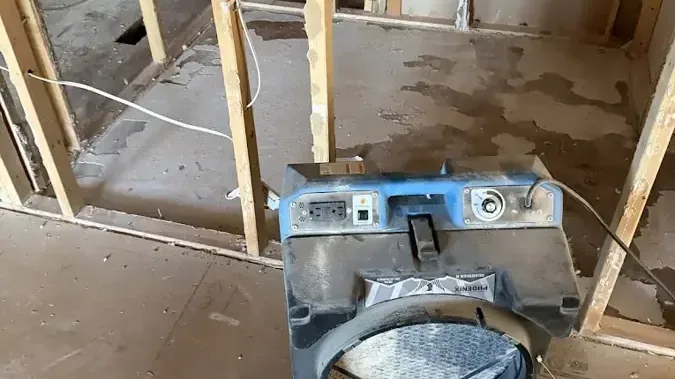
Large blue drying machine faces exposed wall framing and damp flooring
Right now

First steps for structural drying and dehumidification in Stillwater

  1. 1

    Confirm the source is controlled

    Have the source provider verify that plumbing or roof water no longer enters the drying area.

  2. 2

    Remove accessible liquid

    Arrange extraction before expecting air movement and dehumidifiers to handle moisture retained inside materials.

  3. 3

    Mark each wet assembly

    Request a diagram connecting material types with test locations and appropriate dry comparisons.

  4. 4

    Protect equipment airflow

    Keep furniture and stored items away from the planned equipment air paths.

Structural Drying and Dehumidification: the trade facts

Starting pointExtraction and material map
Air taskSupport surface evaporation
Dehumidifier taskRemove vapor from the room
Completion basisMaterial target comparisons

Structural drying is a measured process rather than a collection of fans. Each piece of equipment has a reason tied to the water source, the retained materials and the room conditions. A plan begins after accessible liquid has been recovered.

Define what is wet and what can remain

Technicians compare affected framing, flooring and wall finishes with suitable dry materials in the same property. Contamination, strength and access influence whether an item stays. The drawing records boundaries by assembly, not simply by room, because a floor layer may remain damp where a nearby wall has already reached its goal.

Typical cost ranges

What does structural drying and dehumidification cost in Stillwater, MN?

Structural drying generally ranges from $1,100 to $15,500. Wet material volume, access, chamber layout and the length of measurement based operation affect cost.

Contained area

$1,100 to $5,200

  • Single assembly mapping
  • Focused air movement
  • Daily meter entries

Several materials

$5,200 to $10,400

  • Several material targets
  • Larger dehumidifier layout
  • Controlled cavity access

Large or contaminated loss

$10,400 to $15,500

  • Multiple drying chambers
  • Complex structural materials
  • Extended verification schedule

Ranges are typical figures, not a quote. The category of water, the square footage, the material class and how fast drying started move the number most. The water damage cost calculator gives a closer range.

Step by step

How structural drying and dehumidification is handled in Stillwater

The tech who does the walkthrough finds the source and maps the moisture before equipment goes down, and the drying team keeps it running until the readings say dry.

  1. 1

    Set material targets

    Technicians select dry reference areas that allow meaningful comparisons with each affected type of retained structural material.

  2. 2

    Balance the chamber

    Air movers expose damp surfaces to circulating air while dehumidifiers remove vapor within the planned drying space.

  3. 3

    Monitor fixed locations

    Successive readings at marked points reveal stalled sections and support changes to cavity access or equipment placement.

  4. 4

    Complete with evidence

    The final map identifies assemblies that met their targets and records any locations that remained inaccessible for measurement.

Create a path from material to room air

Air movers support evaporation at exposed surfaces. Controlled openings may be needed when a finish or insulation blocks movement. Dehumidifiers then collect vapor released into the drying chamber. The balance matters: adding airflow without enough vapor removal can leave room humidity high and slow the assignment.

Use measurements to change the arrangement

Fixed locations are checked on later visits so trends can be compared. Equipment is moved, reduced or added when readings show uneven progress. Around Downtown Stillwater, Millbrook and Oak Glen, varied construction calls for material specific observation. No single drying schedule fits every assembly.

Document environmental context and material results

Room temperature and humidity explain the environment in which drying occurs, but they do not replace direct material measurements. Meter type, location and comparison information support interpretation. The Hudson structural drying page describes the main service and its monitoring approach.

Remove equipment only after the goal is supported

Surfaces may feel dry before concealed material reaches a comparable condition. A closing survey repeats the marked points and records any inaccessible area. The final file also notes materials removed, changes to the equipment layout and the source service that preceded drying.

Respond when one material stops improving. A flat measurement trend prompts investigation rather than an automatic extension of the same setup. Technicians check instrument contact, airflow, hidden barriers and whether the original source remains controlled. They may expose a small area or redirect equipment after documenting the reason. This measured adjustment keeps the drying plan active and avoids treating equipment runtime as progress by itself.

The closing equipment count matches the final room diagram and meter log.

  • Extract accessible liquid before relying on evaporation equipment.
  • Keep air paths open around the targeted wet surfaces.
  • Ask for material readings at the same marked locations.
  • Record why equipment was added, moved or removed.

The Stillwater water restoration hub connects drying in ZIP 55082 with extraction and source specific services. Work near North Hill, South Hill and West Stillwater follows the materials confirmed at the property.
Stillwater, MN service area
Service area

Structural drying and dehumidification across Stillwater and nearby towns

Measured drying supports properties in Downtown Stillwater, West Stillwater, South Hill and North Hill within ZIP 55082, with equipment arranged around the inspected materials remaining after extraction.

The same service nearby: structural drying and dehumidification in Hudson, Maplewood, Vadnais Heights.

Water damage restoration in Stillwater · every town covered

Questions and answers

Structural Drying and Dehumidification questions in Stillwater, MN

Is structural drying the same as using fans?

No. A drying plan connects air movement, dehumidification and material access with specific wet assemblies. Ordinary fans without extraction, humidity control or measurement can move air without proving that concealed material improves. Every unit should have a defined material purpose.

Why is extraction performed first?

Liquid water is far more efficient to remove with extraction equipment than through evaporation. Recovering it first reduces the load on dehumidifiers and shortens the path required for retained surfaces to dry. The extraction record establishes the starting water load.

What does a dehumidifier do?

It removes water vapor from room air after damp materials release moisture. This helps maintain a useful drying environment, but direct readings are still needed because room humidity cannot prove the condition inside wood or wallboard. Material response still determines whether placement is useful.

Why are measurements taken at fixed points?

Returning to the same marked locations creates a comparable trend. Random readings can miss a persistent pocket or make ordinary material variation look like progress when the actual wet area has not changed. Marked diagrams keep the comparison locations consistent.

Can cavities dry without being opened?

Some cavities can dry through existing access when clean materials remain stable and airflow reaches them. Insulation, vapor resistant finishes or trapped water may require a limited opening supported by readings. Access decisions are added to the moisture map.

When should drying equipment be removed?

Removal follows material targets, not sound, heat or elapsed time. The technician repeats accessible readings, compares them with a suitable dry reference and records any excluded area before ending the assignment. Any excluded material remains noted after equipment removal.

Still dealing with it?

Drying equipment needs a material based purpose.

(888) 399-5795Request a structural moisture plan
24/7 emergency dispatch

Wet framing indoors? Begin with mapped material measurements.

Drying specialists can set assembly targets, balance airflow with dehumidification and adjust equipment from fixed point readings. A closing map records every accessible material that met its target.

(888) 399-5795Plan the drying chamber
Call (888) 399-5795 · 24/7