24/7 water damage dispatch for Hudson and Saint Croix County
Standing water removal with verification

Emergency Water Extraction in Stillwater, MN

Extraction removes visible water quickly, but the assignment continues at edges, floor layers and adjoining rooms. Equipment choice follows water depth, source classification, access and the material beneath the surface. The boundary is recorded first.

(888) 399-5795Plan the extraction sequence
Portable and truck extraction Floor edge inspection Post extraction measurements
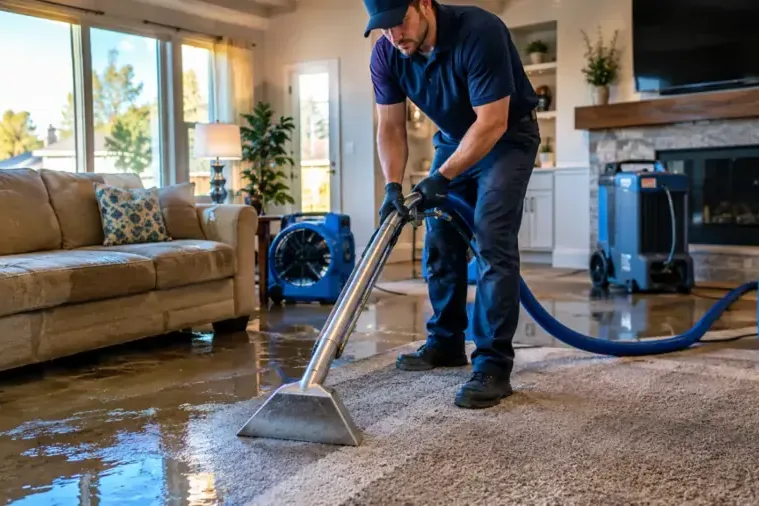
Technician uses an extraction wand on a water-soaked living room rug
Right now

First steps for emergency water extraction in Stillwater

  1. 1

    Control the indoor source

    Stop a leaking appliance or isolate its supply from a dry location when safely accessible.

  2. 2

    Avoid electrical contact

    Stay outside standing water that surrounds outlets or equipment until the hazards have been assessed.

  3. 3

    Move dry contents first

    Protect unaffected belongings along a clean route without dragging wet items through them.

  4. 4

    Request boundary mapping

    Have technicians check flooring transitions and wall edges before extraction changes the visible puddle.

Emergency Water Extraction: the trade facts

Primary taskRemove accessible liquid water
Method choiceDepth, surface and contamination
Next taskFind water beneath finishes
EvidenceBefore and after moisture map

Extraction is the point where a water loss changes from liquid removal to evaporation control. The operator must recover as much accessible water as practical without forcing it into dry material or dragging contaminated hoses through protected areas.

Choose the tool for the surface

Deep water may require pumping before high volume extraction can work efficiently. Portable units reach smaller rooms and upper levels. Hard surface tools collect thin water films, while specialty floor systems can draw from certain layered assemblies after inspection. The team confirms the source and category before connecting one method to a carpet, wood floor or finished wall.

Typical cost ranges

What does emergency water extraction cost in Stillwater, MN?

Emergency extraction ranges from $700 to $6,200. Pumping depth, floor surfaces, contamination controls and equipment access determine how much work is required before structural drying can begin.

Contained area

$700 to $3,200

  • Single room recovery
  • Hard floor extraction
  • Boundary meter survey

Several materials

$3,200 to $4,700

  • Multiple surface tools
  • Contents relocation support
  • Concealed edge checks

Large or contaminated loss

$4,700 to $6,200

  • High volume pumping
  • Contamination work zones
  • Complex floor recovery

Ranges are typical figures, not a quote. The category of water, the square footage, the material class and how fast drying started move the number most. The water damage cost calculator gives a closer range.

Step by step

How emergency water extraction is handled in Stillwater

The tech who does the walkthrough finds the source and maps the moisture before equipment goes down, and the drying team keeps it running until the readings say dry.

  1. 1

    Select the recovery method

    The operator matches pumping depth and extraction attachments to the water category and the actual floor surface.

  2. 2

    Reduce free water

    Controlled passes recover liquid while protected hose routes keep wet equipment from tracking water across unaffected rooms.

  3. 3

    Inspect the perimeter

    After surface recovery, technicians check cabinet bases, adjoining wall bottoms and flooring transitions for moisture beyond the puddle.

  4. 4

    Set the drying handoff

    A marked room diagram identifies damp materials still needing evaporation and records the starting readings for later comparison.

Work from clean routes toward the wet center

Equipment paths are planned so operators do not repeatedly cross dry rooms with wet tools. Contents are lifted or relocated when that can happen safely. Photographs preserve their starting position. Around Downtown Stillwater, North Hill and Oak Glen, room layouts and access vary, so hose placement and staging follow the actual property rather than a standard diagram.

Check the places extraction cannot show

A dry looking floor can conceal water at transitions, beneath cabinets or inside a wall bottom. Moisture instruments compare those places with unaffected material. The Hudson emergency extraction page details the main service and its transition from liquid recovery to controlled drying.

Hand the loss to structural drying

Once extraction produces little additional water, the crew records remaining wet assemblies and establishes air movement and dehumidification. Room temperature and humidity help explain the material readings. Equipment stays connected to a defined drying goal, and later visits show whether that arrangement is working or needs to change.

Track what the tools actually recover

Operators note which sections continue yielding water and which stop after controlled passes. That observation helps distinguish an open surface from a layer that still feeds moisture upward. Extraction also pauses when a finish begins to move or lose stability. The record gives the drying team a practical starting point and shows where later measurements deserve closer attention.

The operator also records tank or hose changes, disposal routing and any surface that could not tolerate further extraction. Those notes explain why the tool sequence differed across the rooms.

Post extraction photographs show the exposed edges before air movement begins.

  • Stop an accessible indoor source before extraction when safe.
  • Keep electrical equipment away from standing water.
  • Document the outer edge before tools change visible conditions.
  • Ask for checks beneath surfaces that held water.

Extraction in ZIP 55082 can support pipe breaks, appliance leaks and storm losses throughout West Stillwater, Millbrook and the Neal Avenue neighborhood. The Stillwater restoration hub connects removal with source specific cleanup and drying services.
Stillwater, MN service area
Service area

Emergency water extraction across Stillwater and nearby towns

Water removal covers Millbrook, the Neal Avenue neighborhood, Downtown Stillwater and West Stillwater within ZIP 55082, using equipment selected for the inspected floor surfaces and access conditions.

The same service nearby: emergency water extraction in Hudson, Maplewood, Vadnais Heights.

Water damage restoration in Stillwater · every town covered

Questions and answers

Emergency Water Extraction questions in Stillwater, MN

How soon should standing water be extracted?

Removal should begin after the source and access are safe. Delay lets liquid move farther into seams, wall bottoms and contents, but electrical or contamination concerns take priority over entering the area quickly. The field lead documents any reason for delay.

Are pumps and extractors the same?

Pumps move deeper collected water efficiently. Extraction tools recover thinner layers from surfaces and can work with certain floor systems. A large loss may use both in sequence before structural drying begins. Tool changes are noted by surface and room.

Does extraction dry the building?

No. Extraction removes accessible liquid and greatly lowers the drying load. Moisture retained in wood, wallboard, concrete or cavities still requires airflow, dehumidification and repeated material measurements after the visible water is gone. Drying equipment then receives a smaller water load.

Can water be pulled from beneath flooring?

Some flooring systems allow specialized extraction, while others need controlled access or removal. Technicians consider the water category, adhesive, underlayment, finish condition and whether the hidden layer can be measured and dried. Direct access findings remain part of that decision.

Why mark the water boundary first?

The initial outline preserves evidence of how far the loss reached before extraction changes appearances. It also directs checks at adjoining walls, cabinets and rooms that may feel dry at the exposed surface. Edges are rechecked after the first recovery pass.

What belongs in an extraction record?

Useful documentation includes the source, category, starting photographs, estimated boundary, tools used, areas treated and post extraction readings. The drying plan should identify every material that remains above its target condition. That record provides the drying team's starting condition.

Still dealing with it?

Visible water is only the first boundary.

(888) 399-5795Arrange controlled water extraction
24/7 emergency dispatch

Standing water in a local room? Protect dry access paths.

Extraction operators can select the right recovery tools, clear accessible liquid and map damp finishes before structural drying begins. The resulting map directs every later drying and material decision.

(888) 399-5795Start water removal
Call (888) 399-5795 · 24/7