24/7 water damage dispatch for Hudson and Saint Croix County
Tank and utility area recovery

Water Heater Leak Cleanup in Stillwater, MN

Tank corrosion, relief valve discharge or a failed connection can spread water across a utility room and into nearby finishes. Cleanup starts with safe shutoff and a complete floor perimeter survey. Nearby storage is protected too.

(888) 399-5795Assess the tank release area
Utility shutoff awareness Floor edge extraction Adjacent room inspection
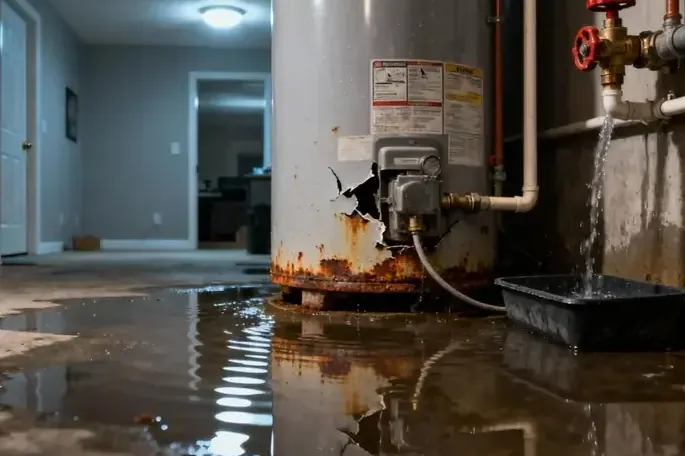
Standing water surrounds a rusted water heater in a utility room
Right now

First steps for water heater leak cleanup in Stillwater

  1. 1

    Stop the water when safe

    Use a reachable water valve only when the approach avoids standing water and electrical hazards.

  2. 2

    Leave utility controls alone

    Qualified service providers should handle unfamiliar fuel connections, power isolation and heater replacement.

  3. 3

    Protect nearby storage

    Move dry boxes and other reachable goods along a clear route away from spreading water.

  4. 4

    Map the floor perimeter

    Include doorway thresholds, wall bases and shelving when recording the release boundary.

Water Heater Leak Cleanup: the trade facts

Common sourcesTank, valve or connection
Initial cautionWater, power and hot surfaces
Migration routeFloor edges and nearby rooms
CloseoutSubfloor and wall base readings

A water heater loss often begins in a crowded utility area where pipes, power, storage and wall finishes meet. The first decision is whether the appliance can be approached safely. Plumbing replacement and water mitigation remain separate parts of the response.

Secure utilities without entering standing water

An accessible water valve can limit the release, but electrical or fuel controls should only be handled when the approach is safe and the responsible trade confirms the procedure. The failed heater stays out of service. Restoration staff record whether water came from a clean connection, the tank or another source before setting handling controls.

Typical cost ranges

What does water heater leak cleanup cost in Stillwater, MN?

Water heater cleanup ranges from $900 to $12,000. Restricted tank access, water beneath stored goods and spread through utility room doorways can increase the work needed around replacement.

Contained area

$900 to $4,200

  • Tank footprint inspection
  • Utility room extraction
  • Wall base readings

Several materials

$4,200 to $8,100

  • Connected room recovery
  • Subfloor access work
  • Stored contents handling

Large or contaminated loss

$8,100 to $12,000

  • Extensive finish removal
  • Several drying sections
  • Longer measurement schedule

Ranges are typical figures, not a quote. The category of water, the square footage, the material class and how fast drying started move the number most. The water damage cost calculator gives a closer range.

Step by step

How water heater leak cleanup is handled in Stillwater

The tech who does the walkthrough finds the source and maps the moisture before equipment goes down, and the drying team keeps it running until the readings say dry.

  1. 1

    Confirm safe source control

    Plumbing and utility providers secure the failed heater before removal opens the appliance footprint for closer inspection.

  2. 2

    Extract around the tank

    Operators recover liquid at the base and beneath accessible storage, documenting places still blocked by the old equipment.

  3. 3

    Survey adjacent finishes

    Once the heater moves, readings extend from its former position through nearby doorways and along wetted wall bases.

  4. 4

    Measure before replacement

    Technicians record the exposed floor condition before the replacement unit returns, then monitor remaining accessible finishes during drying.

Clear the appliance footprint

Extraction begins around the heater base, pan and closest low points. The footprint beneath a tank may remain hidden until removal or replacement creates access. Technicians coordinate photographs and measurements so the starting condition is not lost when the old unit moves. Stored goods are separated from wet flooring and walls.

Follow water out of the utility room

Seams, doorways and wall plates can carry water into an adjoining room. Inspections near West Stillwater, Millbrook and South Hill address the actual floor system rather than assuming all heaters sit in basements. The Hudson water heater cleanup page outlines the main service for tank and connection losses.

Dry around fixed equipment and penetrations

Air movers must reach retained surfaces without blocking service access. Dehumidification manages vapor, while meters track wall bottoms, subfloor and cabinets or shelving nearby. If finishes prevent inspection, a small opening may be necessary. Equipment positions change as the perimeter contracts.

Close only after the replacement area is measured

The old tank footprint needs moisture readings before a replacement covers the floor again. Final documentation includes the source status, extraction notes, materials removed and fixed point readings from the utility area and connected rooms. Any inaccessible space below the new unit is identified honestly in the file.

Keep replacement work from hiding damage. The replacement provider and mitigation team coordinate when the old unit moves and when the new one can occupy the space. That window allows photographs, extraction and readings at the base. If flooring or wall material needs access, the decision is made before reconnection. Clear sequencing protects the new appliance and preserves evidence of the original tank footprint.

  • Do not step into water to operate electrical controls.
  • Keep the heater out of service until a qualified trade responds.
  • Photograph the base and nearby stored contents before movement.
  • Inspect through every doorway reached by the release.

The Stillwater water restoration hub lists extraction and drying help within ZIP 55082. Properties around Oak Glen, North Hill and Downtown Stillwater receive a layout based inspection after a heater failure.
Stillwater, MN service area
Service area

Water heater leak cleanup across Stillwater and nearby towns

Tank leak cleanup serves Oak Glen, West Stillwater, North Hill and Downtown Stillwater within ZIP 55082, inspecting utility spaces and adjacent rooms reached by the heater release.

The same service nearby: water heater leak cleanup in Hudson, Maplewood, Vadnais Heights.

Water damage restoration in Stillwater · every town covered

Questions and answers

Water Heater Leak Cleanup questions in Stillwater, MN

Should the water heater be turned off?

The appliance should remain out of service, but occupants should not cross standing water or handle unfamiliar power or fuel controls. An accessible water valve can be used only when the approach is safe. The reason for each shutoff action is documented.

Who replaces the failed heater?

A qualified plumbing provider handles repair or replacement and any related utility work. The restoration team extracts water, assesses surrounding materials, performs controlled removal and documents drying around the appliance location. Replacement timing is coordinated with footprint inspection.

Can water remain beneath the old tank?

Yes. The footprint may be inaccessible until the heater is moved. Photographs and readings should be coordinated with replacement so hidden flooring, the pan and wall contact areas can be evaluated before a new unit blocks access. The area is measured before new equipment blocks it.

What nearby areas need inspection?

Technicians check floor seams, wall bases, doorway transitions, cabinets, shelving and any room downhill from the release. Stored porous goods also need attention because they can wick water above the visible floor edge. Photographs show the starting arrangement of stored goods.

Does hot water change the drying plan?

Warmer released water can affect finish adhesives and move rapidly, but the response still follows source classification, material condition and measurements. Equipment is selected for the actual wet load after liquid recovery. Water temperature alone does not set removal decisions.

When is the utility area complete?

Closeout follows documented material progress, not appliance replacement alone. The report should include accessible areas beneath the old footprint, final wall and floor readings and any space that could not be inspected. Any hidden area remains listed as an inspection limit.

Still dealing with it?

A replaced tank can still leave wet floor layers.

(888) 399-5795Request a heater loss inspection
24/7 emergency dispatch

Water around a local heater? Avoid wet utility controls.

Cleanup personnel can recover the release, inspect the old tank footprint and measure nearby rooms after plumbing work secures the source. The final file includes the footprint beneath the removed tank.

(888) 399-5795Inspect the utility area
Call (888) 399-5795 · 24/7