24/7 water damage dispatch for Hudson and Saint Croix County
Measured moisture removal

Structural Drying and Dehumidification in Maplewood, MN

Touching a dry finish cannot establish the condition of framing or flooring underneath. Technicians record separate starting readings for affected materials, set equipment around the moisture boundary and follow each monitored location until its drying goal is met.

(888) 399-5795Build a drying plan
Material readings recorded Equipment adjusted by trend Drying goals verified
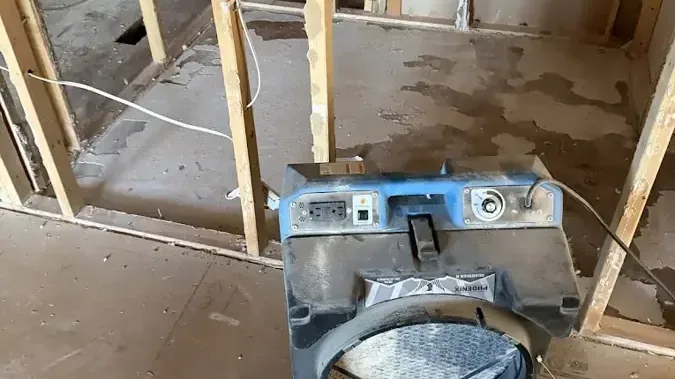
Large blue drying machine faces exposed wall framing and damp flooring
Right now

First steps for structural drying and dehumidification in Maplewood

  1. 1

    Keep equipment undisturbed

    Do not switch off or relocate machines without coordination because placement supports a specific wet zone.

  2. 2

    Maintain the work boundary

    Keep doors, containment and access routes as arranged so the drying environment remains stable.

  3. 3

    Report new water promptly

    A fresh stain, drip or odor may signal another source or an expanding material boundary.

  4. 4

    Allow repeat measurements

    Technicians need access to marked floor, wall, ceiling and framing locations throughout monitoring.

Structural Drying and Dehumidification: the trade facts

Starting pointMap each wet material.
Vapor controlDehumidifiers collect released moisture.
Airflow roleSupport suitable exposed surfaces.
Finish testCompare repeat material values.

Drying is an evidence process. Touch, color and room comfort do not show how much water remains inside a layered assembly. The plan starts by identifying each material selected for retention and recording its initial condition.

Complete extraction and cleaning first

Liquid water is recovered before equipment focuses on absorbed moisture. Contaminated debris must be removed and retained surfaces cleaned before airflow is introduced. This sequence keeps drying equipment from spreading residue and allows exposed materials to release vapor more effectively.

Properties near Geranium Park, the 3M research campus and St. John’s Hospital may serve residential, commercial or institutional uses. Access arrangements account for each building's use, while material readings determine equipment placement and how long drying continues. Measurements at each building control the plan.

Typical cost ranges

What does structural drying and dehumidification cost in Maplewood, MN?

Structural drying ranges from $1,100 to $15,500. The number of material layers, required access, equipment zones and monitoring needs shape the final scope.

Contained area

$1,100 to $5,200

  • single drying section
  • few retained materials
  • direct measurement access

Several materials

$5,200 to $10,400

  • walls and floors tracked
  • multiple equipment positions
  • selective cavity openings

Large or contaminated loss

$10,400 to $15,500

  • broad structural exposure
  • several monitored zones
  • complex vapor management

Ranges are typical figures, not a quote. The category of water, the square footage, the material class and how fast drying started move the number most. The water damage cost calculator gives a closer range.

Step by step

How structural drying and dehumidification is handled in Maplewood

The tech who does the walkthrough finds the source and maps the moisture before equipment goes down, and the drying team keeps it running until the readings say dry.

  1. 1

    Establish material baselines

    Record starting values for every retained layer and identify a suitable dry comparison.

  2. 2

    Create the drying environment

    Position dehumidification, airflow and containment around cleaned, accessible wet surfaces.

  3. 3

    Measure the response

    Compare new values by material and investigate locations that do not improve as expected.

  4. 4

    Confirm readiness for repair

    Verify goals at the former center and perimeter, then document final conditions for reconstruction.

Give each material its own baseline

Flooring, wall board and framing respond differently, so technicians do not combine them into one room reading. Values are collected at the wet center, perimeter and appropriate dry reference. The resulting map highlights pockets that require access or different equipment placement.

Temperature and humidity readings help explain how moisture moves into the air. Dehumidifiers remove that vapor from the work area. Air movers support evaporation across suitable clean surfaces while containment preserves the intended drying environment.

Adjust equipment when the trend changes

Monitoring is not a ceremonial daily check. If one wall improves and a floor edge does not, the crew investigates blocked airflow, an unopened layer or continuing source. Machines may be repositioned, reduced or supplemented according to the recorded response.

The water extraction service covers the liquid removal that precedes this phase. For widespread plumbing discharge, burst pipe cleanup adds shutoff and room by room source context.

Use access only when readings justify it

A closed cavity can prevent reliable inspection and drying. Selective openings expose the supported wet location while preserving unaffected finish. Technicians photograph the condition found inside and add those materials to the monitoring record.

  • Track floors, walls and framing separately.
  • Recheck the outer moisture boundary.
  • Document every equipment placement change.
  • Confirm the source remains corrected.

Completion occurs when retained materials meet reasonable goals and no evidence suggests continuing water. The closeout report gives owners and repair contractors a clear basis for moving into reconstruction.

Technicians also verify that equipment itself has not blocked a measurement point or isolated a damp corner. Notes identify which surfaces were exposed, which stayed finished and where access changed during the project. That history matters when two materials dry at different rates. It lets the final decision reflect each layer instead of a single room condition.

A last perimeter pass confirms that slower corners did not remain hidden behind faster drying open surfaces.

Maplewood, MN service area
Service area

Structural drying and dehumidification across Maplewood and nearby towns

Measured drying is available near Geranium Park, the 3M research campus and St. John’s Hospital. Service encompasses affected residential and commercial assemblies across the overlapping ZIP areas 55117, 55119, 55125, 55113 and 55109.

The same service nearby: structural drying and dehumidification in Hudson, Vadnais Heights, Stillwater.

Water damage restoration in Maplewood · every town covered

Questions and answers

Structural Drying and Dehumidification questions in Maplewood, MN

Why does a dry surface still need measurement?

Moisture can remain behind finish or within a lower layer after the face feels dry. Instruments help evaluate the material instead of relying on touch.

What does a dehumidifier do?

It removes water vapor released into the room as wet materials dry. Its placement and capacity are coordinated with the volume of affected material and air movement.

Are air movers used after sewage cleanup?

Only after contaminated porous material is removed and retained surfaces have been appropriately cleaned. Premature airflow could distribute residue outside the intended zone.

Why are equipment positions changed?

Different sections release moisture at different rates. Monitoring may show that airflow or dehumidification should be redirected toward a slower area.

Does every cavity need to be opened?

No. Selective access is used when readings, physical damage or blocked drying show that a concealed location requires inspection or exposure.

How is drying completion decided?

Technicians compare repeat values with established goals and suitable dry references, check the former perimeter and confirm that the repaired source adds no new water. The closeout record identifies every monitored layer, its ending condition and any selective access created during the project. Repair planning can then focus on documented openings and damaged finishes. Ending photographs preserve the equipment layout and the exact perimeter that received final measurements before machines were removed.

Still dealing with it?

Appearance alone cannot verify deep material recovery

(888) 399-5795Measure each retained layer
24/7 emergency dispatch

Request structural drying in Maplewood.

Technicians establish baselines, manage vapor and airflow, then adjust the equipment as wall, floor and framing values change. The closeout identifies each monitored layer and all access created for reliable measurement.

(888) 399-5795Arrange measured drying
Call (888) 399-5795 · 24/7