24/7 water damage dispatch for Hudson and Saint Croix County
Drying proven by material readings

Structural Drying and Dehumidification in River Falls, WI

Surfaces can appear dry while framing, wall material and flooring still hold moisture. Repeated readings direct dehumidification, airflow and the final dry standard. Different layers may require separate airflow even inside one room.

(888) 399-5795Plan a measured dry out
Material specific readings Equipment adjustments Documented dry goals
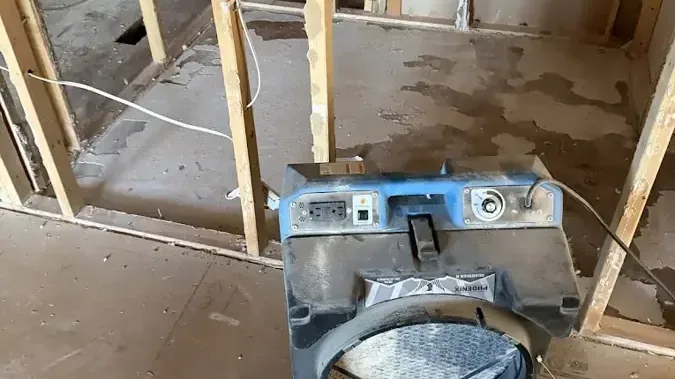
Large blue drying machine faces exposed wall framing and damp flooring
Right now

First steps for structural drying and dehumidification in River Falls

  1. 1

    Confirm source control

    Drying cannot provide a lasting result while roof, plumbing or appliance water continues entering.

  2. 2

    Finish extraction

    Recover accessible liquid so drying equipment addresses moisture held within retained materials.

  3. 3

    Protect the setup

    Keep doors, containment and equipment positions as directed so the controlled environment remains effective.

  4. 4

    Report changes

    Tell the technician about new leaks, moved equipment or opened windows that could alter readings.

Structural Drying and Dehumidification: the trade facts

Starting conditionLiquid removal and material decisions happen before drying.
Reference methodAffected readings compare with suitable dry materials.
Active controlEquipment positions change as each zone responds.
Ending conditionPerimeter and center readings document the final result.

Structural drying is a measured process for materials selected to remain. Technicians create a controlled environment, compare readings over time and concentrate equipment where moisture persists.

Start after liquid recovery and necessary removal

Drying equipment works best after standing water has been extracted and materials unsuitable for retention have been addressed. A dehumidifier cannot correct contamination or restore a finish that has lost physical integrity. The opening moisture map therefore becomes the foundation for every equipment choice.

Technicians identify affected framing, wall material and flooring, then choose suitable dry reference areas. Materials are compared with like materials where possible because one universal reading does not fit every assembly. The result is a set of practical goals rather than a promise based on elapsed time.

Typical cost ranges

What does structural drying and dehumidification cost in River Falls, WI?

Structural drying ranges from $1,100 to $15,500. Wet material volume, access, equipment layout and the time readings require to reach goals shape the scope.

Contained area

$1,100 to $5,200

  • focused moisture zone
  • limited equipment plan
  • direct material access

Several materials

$5,200 to $10,400

  • wall and floor drying
  • multiple reading points
  • equipment repositioning

Large or contaminated loss

$10,400 to $15,500

  • broad structural spread
  • several controlled zones
  • extended verification record

Ranges are typical figures, not a quote. The category of water, the square footage, the material class and how fast drying started move the number most. The water damage cost calculator gives a closer range.

Step by step

How structural drying and dehumidification is handled in River Falls

The tech who does the walkthrough finds the source and maps the moisture before equipment goes down, and the drying team keeps it running until the readings say dry.

  1. 1

    Establish references

    Affected readings are compared with suitable dry materials and current building conditions.

  2. 2

    Design the environment

    Airflow, dehumidification and access are arranged around retained assemblies that need drying.

  3. 3

    Measure and adjust

    Progress visits identify slower areas and direct equipment moves or focused material access.

  4. 4

    Document the endpoint

    Final perimeter and center readings confirm which included components reached their goals. Slow areas are investigated before equipment settings change.

Build airflow around the actual assembly

Air movers support evaporation from compatible surfaces. Dehumidifiers capture the moisture released into the controlled environment. Their number and position reflect room connections, exposed surfaces and indoor conditions. Access openings may be required when finish material prevents air from reaching a wet cavity.

Buildings around Main Street, the University of Wisconsin-River Falls and Glen Park vary in layout and use. Equipment plans follow actual rooms and materials, not assumptions drawn from a corridor or landmark.

Adjust equipment as materials respond

Drying is not a static setup. Technicians return to record material readings, temperature and relative humidity. A fast responding area may need less airflow while an enclosed edge requires repositioning or new access. These changes concentrate energy where moisture remains and reduce unnecessary operation in recovered areas.

When open water is still present, emergency extraction should occur first. For moisture below a visible ceiling stain, ceiling leak cleanup explains source confirmation and overhead access before drying begins.

Use the dry goal as the endpoint

The process ends when included retained materials meet goals supported by dry references and building conditions. Surface touch and appearance may support observations, but readings carry the decision. Final checks cover the perimeter as well as the center of each work zone.

Documentation can include the initial moisture map, equipment placements, daily changes, access created and final readings. That record helps explain reconstruction timing and confirms which assemblies were included in the dry out.

Daily conditions can reveal that two similar surfaces respond differently because one has less access or more layers. Rather than increasing every machine, technicians investigate that location and adjust the route for evaporation. Focused changes may include moving airflow, exposing an edge or separating zones. Each decision returns to the next set of material readings.

River Falls, WI service area
Service area

Structural drying and dehumidification across River Falls and nearby towns

Structural drying is available in ZIP code 54022 around Hoffman Park, Cascade Avenue, Downtown River Falls, Main Street and across River Falls. Drying support covers homes, businesses and institutional spaces locally.

The same service nearby: structural drying and dehumidification in Hudson, Stillwater, New Richmond.

Water damage restoration in River Falls · every town covered

Questions and answers

Structural Drying and Dehumidification questions in River Falls, WI

Why can a dry looking wall still need equipment?

Moisture may remain inside gypsum, framing or insulation after the face changes appearance. Meter readings reveal that retained water.

What does a dehumidifier do?

It collects moisture released into the air by wet materials. Extraction and airflow support the process, while source correction prevents new entry.

Are air movers used for sewage losses?

Airflow begins only after contamination controls, material removal and cleaning make it appropriate. Uncontrolled air can spread contaminated debris.

How are dry goals chosen?

Technicians use suitable reference materials, assembly type and building conditions. The target is tied to the property rather than one universal number.

Why is equipment moved during drying?

Materials release moisture at different rates. Repositioning concentrates airflow and dehumidification where readings show slower progress.

What belongs in the final record?

Initial boundaries, material readings, equipment changes, access decisions and final measurements provide a clear account of the drying work.

What happens when one area dries more slowly?

Technicians investigate access, layers and airflow at that location instead of assuming the whole room needs the same change. Equipment may move, an edge may be exposed or zones may be separated. Later readings show whether the focused adjustment improved the material response. The reason for each focused change is added to the drying record for the affected zone.

Still dealing with it?

A drying plan must account for materials that recover at different rates. Technicians adjust equipment around damp components while preserving progress in completed work areas.

(888) 399-5795Set and track the goals
24/7 emergency dispatch

Arrange measured drying in River Falls.

Technicians balance airflow and dehumidification, then confirm every retained assembly with recorded final readings.

(888) 399-5795Request structural drying
Call (888) 399-5795 · 24/7