24/7 water damage dispatch for Hudson and Saint Croix County
Lower level water cleanup

Basement Flood Cleanup in River Falls, WI

Water at the lowest level can come from plumbing, snowmelt, exterior drainage or a sanitary backup. Correct classification determines safe access, cleaning, removal and drying. Storage, floor layers and finished walls can conceal a much wider boundary.

(888) 399-5795Identify the basement source
Source classification Low point extraction Wall bottom moisture checks
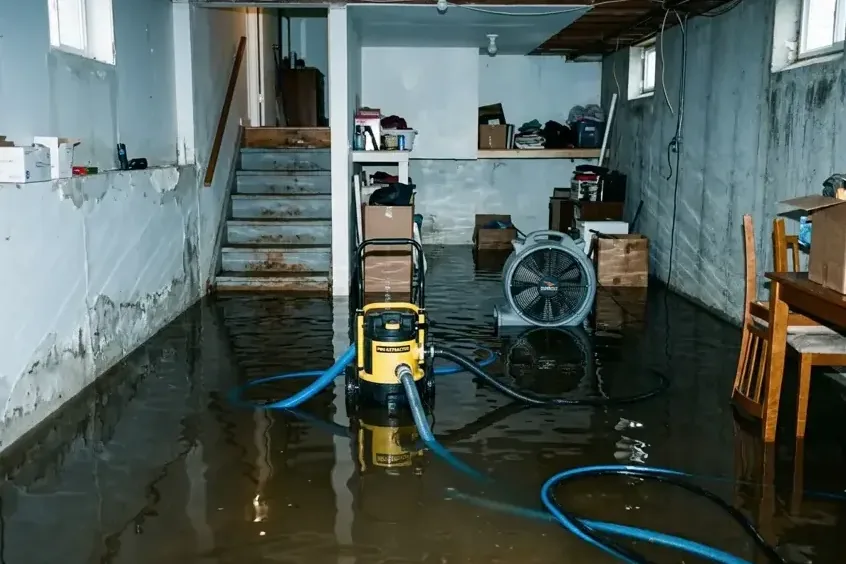
Standing water covers a basement floor around hoses and drying machines
Right now

First steps for basement flood cleanup in River Falls

  1. 1

    Limit entry

    Keep people away from sewage, outside water, wet electrical equipment and any unstable finish.

  2. 2

    Stop plumbing flow

    Use the interior shutoff safely if a supply release is filling the lower level.

  3. 3

    Protect dry storage

    Move accessible items from the path without crossing contaminated water or lifting heavy saturated contents.

  4. 4

    Record the boundary

    Photograph water depth, debris, stains and affected belongings before extraction changes visible conditions.

Basement Flood Cleanup: the trade facts

Source questionPlumbing, outside water and sewage require different controls.
Low point issueWater can remain beneath flooring after pumping.
Material choiceCategory and condition decide what can stay.
Final checkEdges and storage areas receive repeat readings.

Lower level cleanup starts by identifying why water collected there. That finding determines safe entry, extraction equipment, cleaning steps and whether affected porous finishes can remain.

Do not let the lowest point define the source

A basement often collects water released elsewhere. A failed pipe above can drain through wall cavities. Snowmelt or outside drainage can cross an opening. A sanitary backup introduces a different contamination concern. Technicians study the first visible location, flow pattern, odors, debris and plumbing conditions before assigning the water category.

That distinction changes personal protection, containment and what may be retained. Clean supply water addressed quickly may allow more materials to stay. Outside water and sewage demand stricter handling, cleaning and removal decisions. The sewage cleanup process explains those controls when wastewater is involved.

Typical cost ranges

What does basement flood cleanup cost in River Falls, WI?

Basement flood cleanup commonly ranges from $1,600 to $24,000. Source category, standing depth, finish layers, contents and access determine where the inspected loss falls.

Contained area

$1,600 to $7,800

  • focused pump out
  • limited finish impact
  • single drying area

Several materials

$7,800 to $15,900

  • floor and wall involvement
  • content handling needs
  • concealed edge checks

Large or contaminated loss

$15,900 to $24,000

  • sewage or outside water
  • controlled porous removal
  • expanded cleaning scope

Ranges are typical figures, not a quote. The category of water, the square footage, the material class and how fast drying started move the number most. The water damage cost calculator gives a closer range.

Step by step

How basement flood cleanup is handled in River Falls

The tech who does the walkthrough finds the source and maps the moisture before equipment goes down, and the drying team keeps it running until the readings say dry.

  1. 1

    Classify the source

    Evidence separates plumbing, sanitary backup, snowmelt and outside drainage before work begins.

  2. 2

    Remove standing water

    Pumps and extraction tools recover liquid from low points and accessible finish layers.

  3. 3

    Clean and expose

    Contaminated or unsalvageable material leaves under control so retained assemblies can be treated.

  4. 4

    Dry and confirm

    Dehumidification continues with repeated readings across wall bases, flooring and framing. Storage edges receive readings after accessible contents move.

Extract from low areas and layered floors

Pumps remove standing depth, followed by extraction tools for remaining liquid on accessible surfaces. Finished flooring, wall bottoms and stored contents receive separate evaluation. Water may sit beneath a floating floor or behind a finished wall after the open slab looks clear. Moisture readings reveal those hidden reservoirs.

Basements near Main Street, Glen Park and the Kinnickinnic River corridor still need individual source findings. No local landmark proves why water entered a specific property. The crew uses building evidence and confirmed plumbing or exterior observations to establish scope.

Make material decisions before drying

Wet porous material that cannot be cleaned safely is removed under controlled conditions. Stable framing and cleanable hard surfaces receive appropriate treatment. Dehumidifiers manage vapor released from retained assemblies, while air movers support evaporation only where category and layout permit. Technicians avoid directing questionable air toward clean rooms.

For a plumbing source, emergency water extraction reduces the liquid load before deeper drying. For outside entry, correction of the opening or drainage issue remains separate from interior restoration. Cleanup cannot substitute for fixing the cause.

Measure edges, corners and enclosed areas

Drying records include wall bases, floor layers, framing and adjacent storage areas where water could migrate. The team compares affected materials with a suitable dry reference and adjusts equipment as readings change. Final verification gives the owner a defined endpoint based on material condition rather than surface appearance.

Contents also influence the work area. Cardboard, fabric and stored furniture can hold water against floors or walls, so each item is moved or evaluated without dragging contamination into dry rooms. Shelving feet and wall edges are checked after the floor clears. Those secondary contact points help define the true boundary of a basement loss.

Additional corners are checked.

River Falls, WI service area
Service area

Basement flood cleanup across River Falls and nearby towns

Basement service is available in ZIP code 54022, including Downtown River Falls, Division Street, Hoffman Park, Cascade Avenue and nearby residential areas. Storage rooms and finished lower levels are also included.

The same service nearby: basement flood cleanup in Hudson, Stillwater, New Richmond.

Water damage restoration in River Falls · every town covered

Questions and answers

Basement Flood Cleanup questions in River Falls, WI

How is the basement water source identified?

Technicians assessment the first wet area, flow pattern, plumbing condition, debris and exterior entry clues. The source must be supported by evidence in the building.

Can belongings stay in the room?

Dry, movable items may be relocated. Wet contents are documented and evaluated according to material, contamination and condition before cleaning or disposal decisions.

Does outside water require special handling?

Yes. Surface water can carry soil and other contaminants. Work boundaries, protective equipment and porous material decisions reflect that higher uncertainty.

Why is water still found after pumping?

Liquid can remain beneath flooring, behind finished walls and inside absorbent contents. Extraction and moisture mapping continue beyond the open surface.

Will dehumidifiers dry every material?

Dehumidification supports retained assemblies, but it cannot make contaminated or physically damaged porous material suitable to keep. Material decisions come first.

What records help with insurance?

Photographs, source notes, affected room lists, extraction records, material decisions and moisture readings provide organized facts for the owner and carrier.

How are stored contents handled?

Dry items can move to a protected area, while wet belongings are documented and evaluated by material and exposure. Technicians avoid carrying residue across clean floors. After contents move, the newly exposed floor and wall edges receive readings so hidden contact areas become part of the cleanup boundary.

Still dealing with it?

Basement water needs a source based classification. Content handling and edge readings complete the lower level picture.

(888) 399-5795Define the low level loss
24/7 emergency dispatch

Schedule a River Falls basement inspection.

The crew removes standing water, evaluates finish layers and verifies retained materials with documented readings.

(888) 399-5795Request basement cleanup
Call (888) 399-5795 · 24/7