24/7 water damage dispatch for Hudson and Saint Croix County
Remove liquid before it reaches farther

Emergency Water Extraction in New Richmond, WI

Pooled water continues entering seams, wall bottoms and nearby rooms while it remains in place. Extraction reduces that load first, then moisture readings show which materials need a controlled drying phase.

(888) 399-5795Begin focused water removal
Source status confirmed Portable extraction for access Wet perimeter mapped
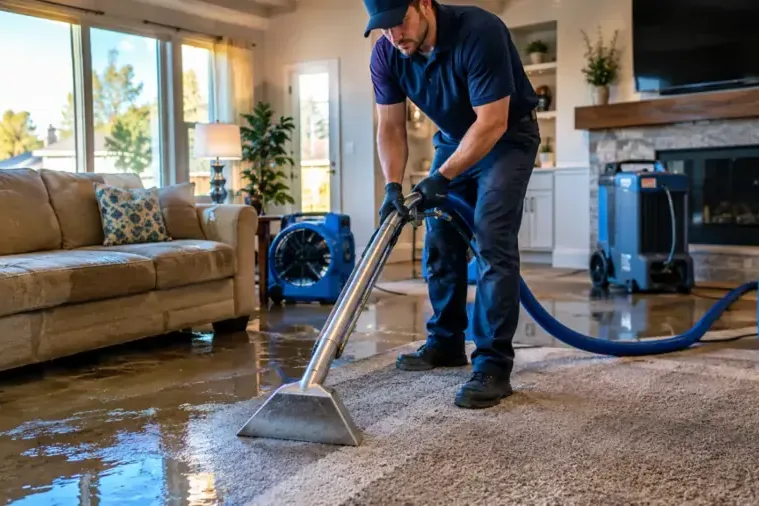
Technician uses an extraction wand on a water-soaked living room rug
Right now

First steps for emergency water extraction in New Richmond

  1. 1

    Stop the active source

    Close a safe plumbing shutoff or arrange appropriate source control before removal equipment begins.

  2. 2

    Keep the path clear

    Prevent people from crossing standing water, especially when electrical or contamination concerns are unknown.

  3. 3

    Move dry possessions

    Relocate reachable contents outside the wet edge without carrying residue into unaffected rooms.

  4. 4

    Describe every affected room

    Report connected spaces, depth changes and lower levels so the extraction plan covers the complete route.

Emergency Water Extraction: the trade facts

Goal oneReduce recoverable liquid quickly and safely.
Goal twoFind spread beyond the visible edge.
Tool choiceMatch equipment to access and surface.
HandoffDefine what must dry afterward.

Extraction is a first phase, not the complete restoration. The crew confirms that the source has stopped, classifies the water and chooses tools that can recover liquid without driving contamination into unaffected areas.

Work from the deepest area toward a verified edge

Standing depth, room connections and floor transitions shape the removal plan. Truck mounted or portable equipment may be selected according to access, volume and surface type. Technicians revisit edges as the water level falls because seams and low spots can release more liquid.

Coverage includes Downtown New Richmond, the Fourth Street corridor and areas near County Road A. Connected rooms can have different floor layers, so each wet section needs its own readings. At each address, inspection determines whether water is on a finished surface, beneath flooring or inside the wall base.

Typical cost ranges

What does emergency water extraction cost in New Richmond, WI?

Emergency water extraction may range from $700 to $6,200. Standing volume, water category, floor area, equipment access and the number of connected rooms establish the applicable scope.

Focused liquid removal

$700 to $3,200

  • accessible water area
  • portable or surface extraction
  • post removal edge readings

Connected room extraction

$3,200 to $4,700

  • several floor transitions
  • repeated low spot passes
  • adjacent material checks

Large removal assignment

$4,700 to $6,200

  • substantial standing volume
  • multiple equipment access points
  • detailed extraction handoff map

Ranges are typical figures, not a quote. The category of water, the square footage, the material class and how fast drying started move the number most. The water damage cost calculator gives a closer range.

Step by step

How emergency water extraction is handled in New Richmond

The tech who does the walkthrough finds the source and maps the moisture before equipment goes down, and the drying team keeps it running until the readings say dry.

  1. 1

    Verify source and category

    Water origin, safety limits and exposure direct the removal approach.

  2. 2

    Recover standing liquid

    Suitable extraction tools work across open areas, edges and accessible low points.

  3. 3

    Inspect neighboring materials

    Meters reveal moisture beneath surfaces and beyond the former puddle.

  4. 4

    Transfer to drying

    The post-extraction map defines retained layers that still require equipment and monitoring. Low spots and floor transitions receive another pass before the remaining moisture map is finalized.

Do not confuse an empty floor with a dry structure

After visible water is gone, meters check adjacent rooms, trim lines, cabinet bases and accessible layers beneath the surface. The moisture map establishes whether extraction alone completed the immediate task or whether selective access and drying equipment are needed.

Water category remains important during removal. A recent supply release may permit ordinary extraction procedures. Outside water or sewage requires containment, protective handling and cleaning steps that preserve separation from dry space. The work route changes with the confirmed exposure.

Protect materials that can still be recovered

Dry contents are moved away from the wet path when handling is safe. Weighted extraction or specialized tools may reduce water held in recoverable floor coverings. Porous material that cannot be safely cleaned and dried is documented before controlled removal. The crew avoids opening finishes until readings and access needs justify it.

Basement flood cleanup addresses lower level source questions. Structural drying begins after recoverable liquid is removed and materials selected for retention are exposed appropriately. Plumbing, appliance or exterior repairs remain separate work.

Record the handoff from wet to drying

Extraction notes capture water depth, volume indicators, affected rooms and material conditions. A post-extraction map then directs air movement and dehumidification. This record makes it clear which work removed liquid and which measurements later demonstrate drying progress.

Low spots can release more water after the first pass as nearby materials drain toward them. Technicians revisit transitions, doorways and floor edges instead of treating an empty center as completion. They also inspect the recovery path for residue that could indicate a different water category than first reported. When portable equipment is used, hose and machine routes stay within the planned work area. These checks preserve clean access and create a reliable post-extraction boundary for the crew responsible for cleaning, selective opening and drying.

New Richmond, WI service area
Service area

Emergency water extraction across New Richmond and nearby towns

Emergency extraction covers ZIP code 54017, including Downtown New Richmond, Fourth Street, County Road A, Knowles Avenue and properties near the Willow River corridor.

The same service nearby: emergency water extraction in Hudson, Stillwater, River Falls.

Water damage restoration in New Richmond · every town covered

Questions and answers

Emergency Water Extraction questions in New Richmond, WI

Is extraction enough to finish water restoration?

Usually it is only the first phase. Materials can retain moisture after standing water is gone, so readings determine whether controlled drying must follow.

What equipment is used?

The crew selects portable or larger extraction tools according to access, water volume, surface type and contamination. One machine does not fit every loss.

Why test outside the puddle?

Water can wick through flooring seams and wall bottoms beyond the visible edge. Moisture measurements locate that hidden extension.

Can contents remain in the room?

Dry items may be moved to protect them and create safe access. Wet contents are evaluated according to material, contamination and condition.

Is sewage extracted the same way?

No. Wastewater requires controlled access, protective procedures and cleaning measures in addition to liquid removal. Dry areas must remain separated.

What record follows extraction?

The file can include initial depth, affected rooms, equipment used and post-removal readings. That information establishes the starting point for drying.

Why might extraction return to a low spot?

Nearby materials can drain toward a transition after the first pass. Rechecking doorways, seams and edges recovers released liquid and gives the drying team a more reliable post-extraction moisture boundary. Before drying equipment is positioned, that second pass also shows whether additional liquid is draining from a concealed floor layer.

Still dealing with it?

Standing water keeps loading floors and wall bottoms until it is recovered. A careful extraction plan reduces liquid while preserving evidence about where it traveled.

(888) 399-5795Remove water and map the remainder
24/7 emergency dispatch

Arrange extraction in New Richmond.

Technicians verify the source, recover accessible liquid and prepare a moisture map for the materials that still need drying.

(888) 399-5795Request emergency extraction
Call (888) 399-5795 · 24/7