24/7 water damage dispatch for Hudson and Saint Croix County
Weather water requires classification

Storm and Flood Cleanup in New Richmond, WI

Runoff crossing a threshold is handled differently from rain entering above a ceiling. Technicians establish the entry route, contamination concerns and full indoor wet boundary before selecting extraction, removal and structural drying methods.

(888) 399-5795Classify the storm entry
Outside water precautions Debris controlled at the edge Moisture map after extraction
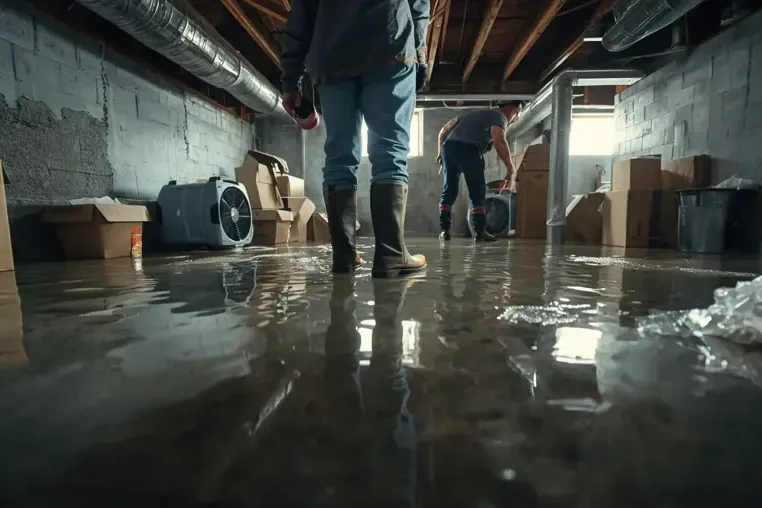
Workers in boots walk through standing water in a basement
Right now

First steps for storm and flood cleanup in New Richmond

  1. 1

    Stay out of unsafe water

    Avoid standing outside water, wet electrical equipment and any ceiling that appears unstable.

  2. 2

    Limit continued entry

    Use safe temporary protection only when it does not require climbing or entering a hazardous area.

  3. 3

    Photograph the first boundary

    Record debris, pooled water and affected rooms before moving items that can safely remain.

  4. 4

    Request source classification

    Have the entry route and exposure category confirmed before broad cleaning, removal or airflow begins.

Storm and Flood Cleanup: the trade facts

First questionDid water enter from above or across the ground?
Outside waterAssume contamination until conditions support another classification.
Wet edgeMeasure beyond stains and standing water.
FinishVerify retained materials with final readings.

A storm can create several water paths at once. Rain may enter through a damaged opening, while runoff finds a doorway or low transition. The crew documents each route separately because contact with outdoor water changes cleaning and material decisions.

Read the route before moving the water

The first survey connects exterior entry with indoor effects. A ceiling stain suggests a path through insulation or framing. Sediment along a floor edge points toward surface flow. Moisture readings extend into adjacent wall bottoms, flooring seams and rooms below, where the water may no longer be visible.

The Willow River runs near central New Richmond. Cleanup at a wet building follows the entry opening and visible water marks into affected rooms. Likewise, Downtown New Richmond and the Knowles Avenue corridor contain different lots and structures. Conditions at the address determine whether the source was river water, local runoff, roof entry or an unrelated plumbing release.

Typical cost ranges

What does storm and flood cleanup cost in New Richmond, WI?

Storm and flood cleanup may range from $1,800 to $32,000. Water category, debris, material depth, extraction volume and safe access determine the suitable tier after inspection.

Focused storm area

$1,800 to $8,500

  • one extraction work zone
  • limited debris control needs
  • targeted material moisture checks

Connected wet rooms

$8,500 to $20,200

  • several finishes affected
  • planned material access points
  • multiple drying areas tracked

Extensive outside water

$20,200 to $32,000

  • broad contamination controls
  • porous finish removal
  • detailed drying documentation

Ranges are typical figures, not a quote. The category of water, the square footage, the material class and how fast drying started move the number most. The water damage cost calculator gives a closer range.

Step by step

How storm and flood cleanup is handled in New Richmond

The tech who does the walkthrough finds the source and maps the moisture before equipment goes down, and the drying team keeps it running until the readings say dry.

  1. 1

    Separate entry paths

    Inspection distinguishes runoff, roof travel and unrelated plumbing releases.

  2. 2

    Control the work edge

    Barriers and access rules keep debris away from unaffected rooms.

  3. 3

    Recover water and residue

    Extraction and cleaning address the confirmed exposure before drying equipment is arranged.

  4. 4

    Verify retained layers

    Repeat readings track flooring, wall material and framing against the chosen dry goal. Debris edges and newly exposed materials are added whenever changing weather expands the controlled work area.

Keep contaminated material inside a controlled zone

Outside water can carry soil and other residues. Workers establish a boundary, protect clean access and recover standing liquid without tracking debris through dry rooms. Porous finishes that cannot be cleaned safely are removed under controlled conditions. Stable framing and other retained materials receive cleaning appropriate to their exposure before drying begins.

The City of New Richmond maintains a stormwater program and publishes best management information. The building inspection follows runoff at thresholds, window openings and other points where water can enter. The restoration scope remains tied to observed entry, tested materials and the actual debris line.

Dry what remains, then confirm the result

Extraction reduces the liquid load. Dehumidifiers collect vapor as retained materials release moisture, and air movement is used only where the exposure category permits. Technicians compare repeat readings with a suitable dry reference and reposition equipment when one part of the assembly improves faster than another.

Structural drying explains how those measurements direct equipment. If pooled water is the immediate problem, emergency extraction addresses liquid removal first. Neither service replaces repair of the opening or drainage condition that allowed entry.

Maintain a storm loss record

Photographs, initial moisture readings, debris boundaries, material decisions and equipment notes create a timeline for the owner. If more weather arrives, technicians update the map so new entry is not confused with moisture that was already being dried.

The edge between storm affected and dry space can shift while cleanup continues. Technicians mark floor transitions, wall bases and doorways so later readings can be compared with the first survey. Contents moved from that edge stay on a clean route and receive separate condition notes. When sediment appears in a new area, the work boundary expands before equipment crosses it. This step keeps airflow, debris handling and personnel movement aligned with the confirmed exposure instead of the changing appearance of surface water.

New Richmond, WI service area
Service area

Storm and flood cleanup across New Richmond and nearby towns

Storm cleanup serves ZIP code 54017, including Downtown New Richmond, the Willow River corridor, Knowles Avenue and Fourth Street. Coverage also includes properties near County Road A.

The same service nearby: storm and flood cleanup in Hudson, Stillwater, River Falls.

Water damage restoration in New Richmond · every town covered

Questions and answers

Storm and Flood Cleanup questions in New Richmond, WI

Is all rain damage treated as floodwater?

No. Water entering from a roof and water flowing across the ground have different exposure concerns. Inspection confirms the route before materials are handled.

Why is outdoor water treated cautiously?

Surface flow may carry soil, organic debris and other contamination. Controlled access and material evaluation reduce the chance of spreading residue into clean space.

Does living near the Willow River prove flooding?

No. The river is a local feature, not evidence about one property. Technicians verify the actual route, debris and indoor moisture pattern.

Can wet flooring stay in place?

It depends on water category, construction, physical condition and access for cleaning and drying. Readings and inspection support a material specific decision.

What records help after a storm?

Photograph entry points, debris lines, affected rooms and contents when safe. Keep those images with moisture records, removal notes and repair information.

What happens if rain enters again?

The crew updates the moisture map and separates new entry from the original drying record. Equipment placement and the work boundary change when conditions require it.

How is a changing debris edge handled?

The crew marks floor transitions, wall bases and doorways, then updates the controlled boundary if sediment appears beyond it. Equipment and contents follow clean routes so new exposure does not spread into rooms that were previously unaffected. Updated photographs preserve the change.

Still dealing with it?

Storm water can change category and direction as it crosses a building. A source based inspection keeps cleanup tied to actual exposure.

(888) 399-5795Define the entry and debris edge
24/7 emergency dispatch

Arrange a New Richmond storm assessment.

Technicians classify water, recover liquid, evaluate porous finishes and record drying progress across every retained layer.

(888) 399-5795Request storm cleanup help
Call (888) 399-5795 · 24/7