24/7 water damage dispatch for Hudson and Saint Croix County
Rain and runoff require classification

Storm and Flood Cleanup in Vadnais Heights, MN

Rain entering through a roof creates a different cleanup problem from water crossing the ground. Technicians examine the entry route and contamination concerns, then map wet building materials to choose appropriate removal and drying methods.

(888) 399-5795Classify the storm water source
Entry path investigation Controlled water removal Reading based drying
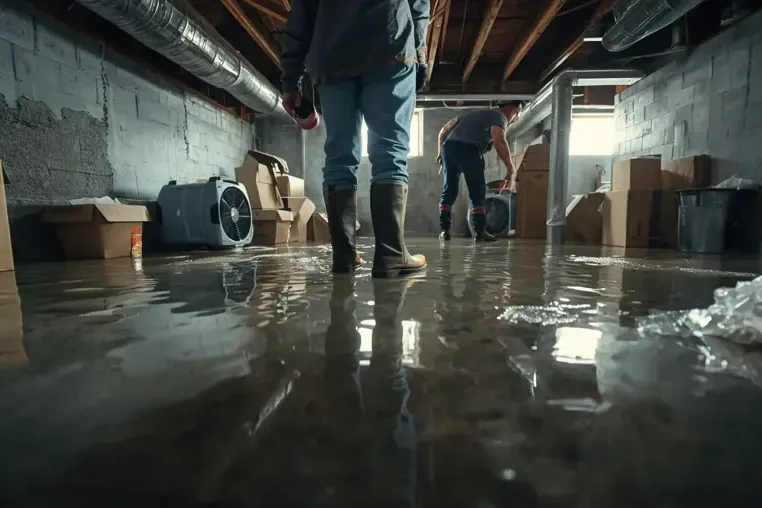
Workers in boots walk through standing water in a basement
Right now

First steps for storm and flood cleanup in Vadnais Heights

  1. 1

    Keep away from hazards

    Avoid standing water, wet electrical equipment and sagging ceiling material while entry remains active.

  2. 2

    Limit safe entry

    Use an accessible temporary measure only when it can reduce rain entry without creating another hazard.

  3. 3

    Photograph the route

    Record the opening, debris edge, affected rooms and contents before safe items are moved.

  4. 4

    Request source assessment

    Have roof water and ground water distinguished before broad cleanup or drying begins.

Storm and Flood Cleanup: the trade facts

First questionDid water enter from above or cross the ground?
Primary hazardOutside water may carry sediment into finished space.
Work boundaryReadings extend beyond the visible water edge.
Completion proofRetained materials reach a documented drying goal.

A weather loss begins with a route, not a label. Water entering beside a roof opening can move through insulation and ceiling finishes. Flow crossing a threshold has touched outdoor surfaces and may carry debris. The cleanup plan should reflect that difference before equipment starts.

Trace entry around the local watershed setting

Vadnais Heights lies within the Ramsey-Washington Metro Watershed District and the Vadnais Lake Area Water Management Organization. Water in that watershed eventually reaches East Vadnais Lake. At the building, the crew checks exterior openings and sediment trails to trace stormwater entry. Technicians inspect the building itself and follow staining, debris, damp seams and material readings toward the opening.

Properties near the Vadnais Lake area, Interstate 35E corridor and County Highway 96 corridor can have different layouts and drainage conditions. The crew does not infer flooding from a place name. Instead, the survey records where water crossed the envelope and which interior layers became wet.

Typical cost ranges

What does storm and flood cleanup cost in Vadnais Heights, MN?

Storm and flood cleanup may range from $1,800 to $32,000. Water category, volume, affected finishes, access and the drying scope determine where a particular project falls.

Limited storm area

$1,800 to $8,500

  • contained extraction
  • small debris boundary
  • focused material checks

Layered interior damage

$8,500 to $20,200

  • several wet finishes
  • controlled access work
  • multiple equipment zones

Extensive contaminated entry

$20,200 to $32,000

  • large work boundary
  • porous material removal
  • detailed cleaning controls

Ranges are typical figures, not a quote. The category of water, the square footage, the material class and how fast drying started move the number most. The water damage cost calculator gives a closer range.

Step by step

How storm and flood cleanup is handled in Vadnais Heights

The tech who does the walkthrough finds the source and maps the moisture before equipment goes down, and the drying team keeps it running until the readings say dry.

  1. 1

    Identify the route

    Inspection distinguishes roof entry, surface flow and unrelated indoor plumbing.

  2. 2

    Control the boundary

    Barriers and safe access practices separate wet work from unaffected space.

  3. 3

    Recover and clean

    Extraction removes liquid before residue and materials receive category appropriate treatment.

  4. 4

    Confirm drying

    Technicians compare drying readings across retained assemblies with the original moisture boundary, using pre-extraction photographs to preserve evidence of sediment and entry patterns.

Remove liquid without spreading residue

Standing water is recovered with pumps or extraction tools suited to the depth and access. Work zones keep wet debris away from unaffected rooms. Porous finishes are evaluated according to contamination, damage and cleanability. When a material cannot be restored safely, controlled removal exposes the remaining assembly for cleaning and drying.

Roof entry may require different handling because the water can pass through insulation before reaching the room. The roof leak service explains that tracing process. When liquid removal is the immediate concern, emergency extraction describes the first reduction step.

Use readings to adjust the drying layout

After bulk water leaves, dehumidifiers manage vapor released by retained materials. Air movement is used only where the water category and assembly make it appropriate. Technicians check flooring, wall bottoms, framing and other selected points over time. Slow areas may need improved access or a changed equipment position.

Weather can add new water during an active project. The crew watches protected openings and rechecks the moisture edge when conditions change. That prevents a renewed entry from being mistaken for poor drying in the original zone.

Document the storm loss from start to finish

Photographs, source observations, debris boundaries, removal choices and moisture readings form a practical record. Final checks cover the full mapped area rather than a single convenient spot. Property owners receive a room by room scope showing the contaminated surfaces, materials selected for removal and retained framing that needs cleaning and monitored drying.

Residue patterns can clarify how outside water crossed a room. Sediment at a doorway, a clean water line on a wall and debris collected at a floor transition each provide different clues. Technicians photograph these signs before extraction changes them. The evidence is compared with exterior openings and interior measurements, not used alone. This sequence supports water category decisions and helps the owner understand why two nearby rooms may receive different cleaning or material recommendations after the same weather period.

Vadnais Heights, MN service area
Service area

Storm and flood cleanup across Vadnais Heights and nearby towns

Storm restoration reaches the Vadnais Lake area, East Vadnais Lake watershed and surrounding highway corridors, with coverage across overlapping ZIP areas 55117, 55110, 55109, 55126 and 55127 for affected properties.

The same service nearby: storm and flood cleanup in Hudson, Maplewood, Stillwater.

Water damage restoration in Vadnais Heights · every town covered

Questions and answers

Storm and Flood Cleanup questions in Vadnais Heights, MN

Is all storm water considered the same?

No. Roof entry and water crossing the ground have different paths and contamination concerns. Inspection establishes the source before cleanup choices are made.

Does living near a lake prove flood exposure?

No. The Vadnais Lake area provides geographic context only. Conditions at the individual building must show how water entered and what it contacted.

Why are rooms beyond the puddle checked?

Water can travel under flooring, along wall bottoms or through a ceiling cavity. Readings locate wet layers outside the visible edge.

Can storm damaged material stay in place?

Some stable material may be cleaned and dried. Contamination, physical damage and access determine whether porous finishes can remain.

What should an owner photograph?

Photograph the entry, standing water, residue line, affected contents and safe emergency actions. Keep later readings and invoices with those images.

How is the drying endpoint decided?

Technicians compare affected materials with an appropriate dry reference. Completion depends on readings, not a fixed number of days.

Why document sediment before extracting water?

Residue can show the direction and reach of outside flow before equipment disturbs the pattern. Technicians compare that evidence with openings, affected materials and moisture readings. Photographs help preserve the initial boundary and support later explanations of why cleaning, access or removal differed between connected rooms. The photographs remain part of the loss record after the visible sediment is gone.

Still dealing with it?

Storm water can change its route while weather continues, so updated inspection matters throughout the project.

(888) 399-5795Clarify the entry path
24/7 emergency dispatch

Schedule a Vadnais Heights storm assessment.

Technicians monitor weather changes and indoor readings while classifying incoming water, recovering accumulation and measuring each retained building layer included in the active drying plan.

(888) 399-5795Request storm cleanup
Call (888) 399-5795 · 24/7