24/7 water damage dispatch for Hudson and Saint Croix County
Lower level source investigation

Basement Flood Cleanup in Vadnais Heights, MN

Water on a lower level can come from plumbing, surface drainage, snowmelt or a sanitary backup. Classification determines safe access, material handling, cleaning and the drying strategy. Contents and wall bases are included in that decision.

(888) 399-5795Identify the basement water source
Source and category assessment Standing water extraction Lower wall moisture checks
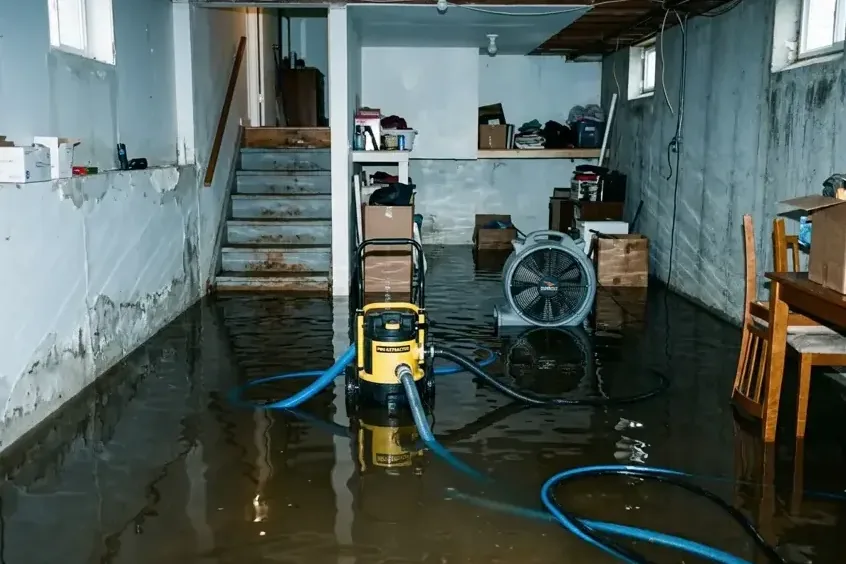
Standing water covers a basement floor around hoses and drying machines
Right now

First steps for basement flood cleanup in Vadnais Heights

  1. 1

    Stay upstairs

    Do not enter standing water when electrical contact, sewage or unstable materials may be present.

  2. 2

    Stop safe plumbing flow

    Use an accessible shutoff only when an indoor plumbing release is confirmed and the route is safe.

  3. 3

    Keep residue contained

    Do not carry wet belongings through unaffected rooms before contamination is understood.

  4. 4

    Photograph from safety

    Record the visible water edge, entry clue and damaged contents without entering a hazardous area.

Basement Flood Cleanup: the trade facts

First decisionSeparate plumbing, outside water and sanitary sources.
Access ruleAvoid electrical and contamination hazards.
Moisture mapTest floor layers, wall bottoms and stored contents.
Drying finishVerify retained assemblies with repeated readings.

A flooded lower level is a location, not a water category. A supply release, drain backup and snowmelt entry can cover the same floor while requiring different controls. Technicians determine the source and contacts before people enter the work area or move wet belongings.

Read the evidence at the lowest occupied level

Debris, odor, the direction of flow and nearby plumbing can help narrow the cause. The inspection also extends to wall bottoms, flooring edges, utility areas and contents sitting in the water. If water remains active, source correction comes before a final restoration boundary.

Vadnais Heights lies within the Ramsey-Washington Metro Watershed District, and city guidance recommends reducing hard surface area to help prevent flooding. Those facts offer drainage context without proving why one basement became wet. A property near East Vadnais Lake, County Highway 96 or the U.S. Highway 61 corridor still needs direct source confirmation.

Typical cost ranges

What does basement flood cleanup cost in Vadnais Heights, MN?

Basement flood cleanup may range from $1,600 to $24,000. Depth, water category, affected finishes, contents and drying access determine the applicable project tier.

Contained lower area

$1,600 to $7,800

  • focused liquid removal
  • limited finish impact
  • single drying zone

Multiple wet assemblies

$7,800 to $15,900

  • floor and wall layers
  • contents coordination
  • broader equipment layout

Large contaminated loss

$15,900 to $24,000

  • restricted work area
  • porous material removal
  • detailed cleaning steps

Ranges are typical figures, not a quote. The category of water, the square footage, the material class and how fast drying started move the number most. The water damage cost calculator gives a closer range.

Step by step

How basement flood cleanup is handled in Vadnais Heights

The tech who does the walkthrough finds the source and maps the moisture before equipment goes down, and the drying team keeps it running until the readings say dry.

  1. 1

    Classify the water

    Inspection separates supply water, drainage entry, snowmelt and sanitary flow.

  2. 2

    Lower the volume

    Pumps and extraction tools recover accessible liquid without spreading residue.

  3. 3

    Address affected material

    Cleaning, access and removal choices follow contamination and physical condition.

  4. 4

    Measure the lower level

    Separate notes for each lower level zone pair repeated floor and wall measurements with the drying adjustments and final results.

Remove water according to depth and contamination

Extraction equipment reduces the liquid load while work zones keep residue away from clean areas. Sewage or water that crossed the ground requires stronger controls than a recent supply release. Wet porous finishes and contents are evaluated for cleaning, drying or controlled disposal based on their condition and exposure.

When wastewater is confirmed, the sewage cleanup service describes the additional controls. If the water is clean and accessible but extensive, emergency extraction explains how bulk removal limits continued spread.

Dry wall bottoms and floor layers deliberately

Liquid can leave the visible surface while remaining below flooring or inside lower walls. Dehumidification manages released vapor, and air movement supports clean retained materials where appropriate. Technicians use repeat readings to identify slow areas and decide whether more access is needed.

Stored items can also block airflow or transfer water into dry areas. The crew sorts movement and documentation around safety, contamination and the owner's priorities. Unaffected contents stay outside the work zone when possible.

Close the scope with source specific records

The project record can include initial depth, source observations, photographs, affected contents, material decisions and final readings. Completion is based on the mapped materials reaching an appropriate goal. That approach avoids treating every Vadnais Heights lower level as the same construction or assuming that nearby water features caused the loss.

Floor drains, stair openings and utility penetrations can create separate pockets within the same lower level. The initial map marks these transitions so extraction does not end at the center of the room. Technicians also note the height of visible residue on walls or contents because that evidence can support later cleaning and removal decisions. After the floor is accessible, each perimeter section receives its own measurements. This segmented approach helps distinguish a small remaining pocket from a problem affecting the entire lower level.

Vadnais Heights, MN service area
Service area

Basement flood cleanup across Vadnais Heights and nearby towns

Basement cleanup reaches northwestern Vadnais Heights, school areas and properties along the lake and highway corridors within overlapping ZIP areas 55117, 55110, 55109, 55126 and 55127.

The same service nearby: basement flood cleanup in Hudson, Maplewood, Stillwater.

Water damage restoration in Vadnais Heights · every town covered

Questions and answers

Basement Flood Cleanup questions in Vadnais Heights, MN

Is basement water always groundwater?

No. Plumbing, sanitary flow, snowmelt and surface drainage can all reach a lower level. Evidence at the property must establish the source.

Can a wet wall bottom dry without removal?

Sometimes. Water category, finish condition and access determine whether cleaning and drying are practical or controlled removal is needed.

Should stored boxes be moved immediately?

Only when movement is safe and will not spread contamination. Photograph affected contents first and keep wet items separated from dry rooms.

Why test beneath finished flooring?

Water can remain between layers after the surface is extracted. Readings help locate trapped moisture and direct access decisions.

Does a local watershed prove flood risk?

No. Watershed membership is geographic context. An inspection identifies the source by following water marks, entry openings and plumbing conditions inside the building.

When is basement drying complete?

Completion follows repeat readings from the affected materials compared with appropriate dry references, not appearance or a preset schedule.

How are separate basement areas tracked?

The crew divides the lower level into practical measurement zones around rooms, drains, stairs and utility spaces. Each zone receives source observations, material notes and repeated readings. That record shows where extraction finished, where access changed and which retained surfaces still need drying instead of treating the whole basement as one uniform area. Separate zone notes also make later equipment moves easier to explain clearly.

Still dealing with it?

Lower level water needs classification before contents or finishes are disturbed.

(888) 399-5795Find the basement source
24/7 emergency dispatch

Schedule a Vadnais Heights lower level assessment.

Technicians recover accumulated water and separate contaminated areas, then compare floor and wall readings in each affected lower level zone.

(888) 399-5795Request basement cleanup
Call (888) 399-5795 · 24/7