24/7 water damage dispatch for Hudson and Saint Croix County
Diagnose before opening floors

Slab Leak Water Damage in River Falls, WI

Warm spots, damp flooring or unexplained water can suggest a concealed plumbing release. Findings must confirm the source before access, extraction and drying are planned. Comparing the pattern over time separates active spread from older marks.

(888) 399-5795Investigate concealed floor moisture
No foundation assumptions Floor pattern mapping Plumbing findings first
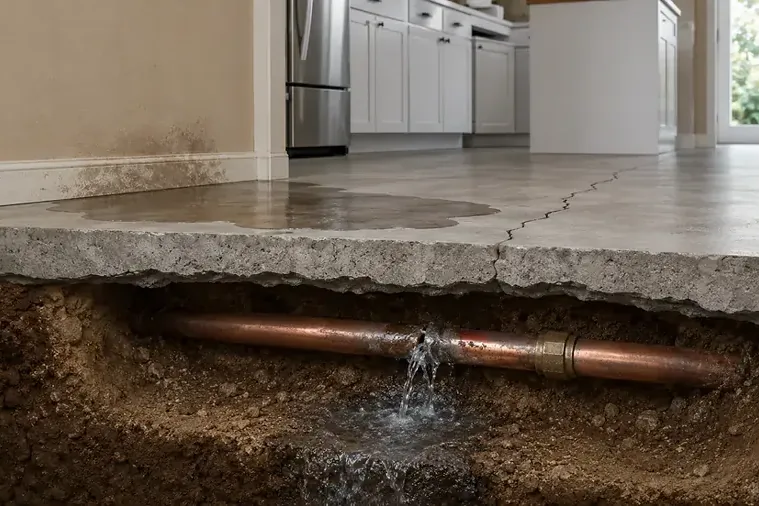
Open concrete and tile expose a leaking copper pipe below
Right now

First steps for slab leak water damage in River Falls

  1. 1

    Control known flow

    Use the interior shutoff safely if plumbing findings indicate an active supply release.

  2. 2

    Protect the area

    Keep furniture and contents away from damp flooring, lifted finishes and any electrical concern.

  3. 3

    Note visible clues

    Photograph discoloration, loose flooring, damp wall bases and where water first appeared.

  4. 4

    Seek diagnosis

    Coordinate plumbing source testing before broad demolition or a restoration drying plan begins.

Slab Leak Water Damage: the trade facts

Required proofPlumbing findings must support the concealed source.
Floor patternCenter and perimeter readings define material spread.
No assumptionThe building assembly is identified at the property.
Repair handoffAccess coordinates plumbing correction and restoration.

A possible leak beneath flooring requires disciplined source diagnosis. Restoration findings describe where materials are wet, while the plumbing trade determines the pipe location and correction.

Locate the pipe before opening the floor

The first inspection identifies the floor assembly and checks whether a supply pipe runs beneath the concrete. A damp floor then receives a focused plumbing assessment. Plumbing findings, meter patterns and visible material changes help distinguish a concealed supply release from an appliance, bathroom or exterior source.

A restoration crew does not guess where to open the floor. The likely source area is coordinated with the appropriate plumbing trade. Moisture readings then establish what building materials were reached. This division keeps pipe diagnosis, repair access and water damage work connected without treating them as the same service.

Typical cost ranges

What does slab leak water damage cost in River Falls, WI?

Slab leak water damage work can range from $1,800 to $22,000. Floor layers, confirmed spread, access and restoration after plumbing diagnosis shape the scope.

Contained area

$1,800 to $7,600

  • focused floor boundary
  • limited finish access
  • targeted drying setup

Several materials

$7,600 to $14,800

  • floor and wall impact
  • adjoining room checks
  • coordinated access zones

Large or contaminated loss

$14,800 to $22,000

  • broad concealed spread
  • substantial finish removal
  • extended material verification

Ranges are typical figures, not a quote. The category of water, the square footage, the material class and how fast drying started move the number most. The water damage cost calculator gives a closer range.

Step by step

How slab leak water damage is handled in River Falls

The tech who does the walkthrough finds the source and maps the moisture before equipment goes down, and the drying team keeps it running until the readings say dry.

  1. 1

    Confirm the source

    Plumbing findings and moisture patterns establish whether a concealed pipe release is involved.

  2. 2

    Define material spread

    Readings cover flooring, walls, cabinets and connected rooms around the suspected area.

  3. 3

    Coordinate access

    Containment and selective removal support pipe repair, water recovery and exposure of wet layers.

  4. 4

    Measure retained material

    Drying continues until repeated readings meet goals established from suitable reference areas. Repeat patterns are compared after plumbing correction confirms control.

Read the floor as a pattern

Moisture may show as a concentrated area, an edge along a wall or spread beneath connected flooring. Technicians compare suspected zones with known dry areas and check wall bottoms, cabinets and adjoining rooms. Temperature differences alone do not define the scope. Multiple observations support the map.

Buildings near Downtown River Falls, Cascade Avenue and the University of Wisconsin-River Falls have varied uses and assemblies. Floor access follows the slab, pipe and finish layers found during the walkthrough. Each inspection records only the materials and conditions actually present.

Coordinate access with source correction

Once plumbing findings identify the repair area, restoration can protect contents, create containment and remove water damaged finish material where necessary. Extraction may help when liquid is accessible beneath flooring. Cleanable, stable components receive treatment before drying equipment is arranged.

The appliance leak service covers another possible source near kitchens or utility spaces. The bathroom leak page explains checks around showers, toilets and supply pipes. Source separation prevents unnecessary floor removal.

Dry the assembly that remains

Dehumidifiers lower vapor in the controlled area while airflow supports compatible surfaces. Specialty methods may be considered for certain floor systems only after material and installation details are known. Technicians track readings at the center, edges and nearby walls rather than relying on how the finish looks.

Final records describe the confirmed source, access created, affected materials and change in readings. They also identify any areas left for plumbing or reconstruction. The result is a restoration boundary based on building evidence, with clear notes for the repair trade.

A mapped pattern can help separate old staining from active moisture. Technicians note where readings change across flooring transitions and whether wall bases respond in the same direction. After repair access closes the source, repeat measurements show whether the pattern is shrinking. That comparison supports focused drying while keeping the wet floor layers accessible for inspection.

Additional final readings support the documented repair boundary.

River Falls, WI service area
Service area

Slab leak water damage across River Falls and nearby towns

Slab leak water restoration is available in ZIP code 54022 around Main Street, Division Street, Glen Park, Hoffman Park and River Falls. The service includes business, campus and residential interiors.

The same service nearby: slab leak water damage in Hudson, Stillwater, New Richmond.

Water damage restoration in River Falls · every town covered

Questions and answers

Slab Leak Water Damage questions in River Falls, WI

Is a damp floor proof of a slab leak?

No. Appliance, bathroom, exterior and other plumbing sources can create similar symptoms. Diagnosis should confirm the source before access begins.

Does every local property have the same foundation?

No townwide foundation type is confirmed. The plan must follow the actual building assembly and plumbing findings at the property.

Who locates and repairs the pipe?

The appropriate plumbing trade handles pipe diagnosis and repair. Restoration maps resulting moisture, removes water damaged material and dries retained assemblies.

Can finished flooring be saved?

Material type, installation, contamination and physical condition determine that choice. Readings also show whether moisture can be reached without full removal.

Why check nearby walls?

Water beneath a floor can reach wall bottoms, cabinets or adjoining rooms. Edge readings define whether the loss extends beyond the first damp spot.

What documentation is produced?

Records can include source findings, moisture maps, access areas, material decisions, equipment changes and final readings for the restoration work.

Can old staining be separated from active moisture?

Often, current meter patterns and repeat readings help distinguish an active wet area from a dry cosmetic mark. Technicians compare floor transitions, wall bases and suitable references after source correction. The change over time supports the restoration boundary without treating appearance alone as proof of ongoing water. Repeat readings after repair provide an additional check on that conclusion.

Still dealing with it?

Concealed floor moisture needs a source diagnosis before demolition. Repeat mapping after plumbing correction shows whether drying is reducing the wet area beneath affected finishes.

(888) 399-5795Build the evidence first
24/7 emergency dispatch

Arrange a River Falls floor moisture assessment.

The team maps finishes and walls, coordinates access and tracks retained materials after plumbing correction.

(888) 399-5795Request slab leak cleanup
Call (888) 399-5795 · 24/7