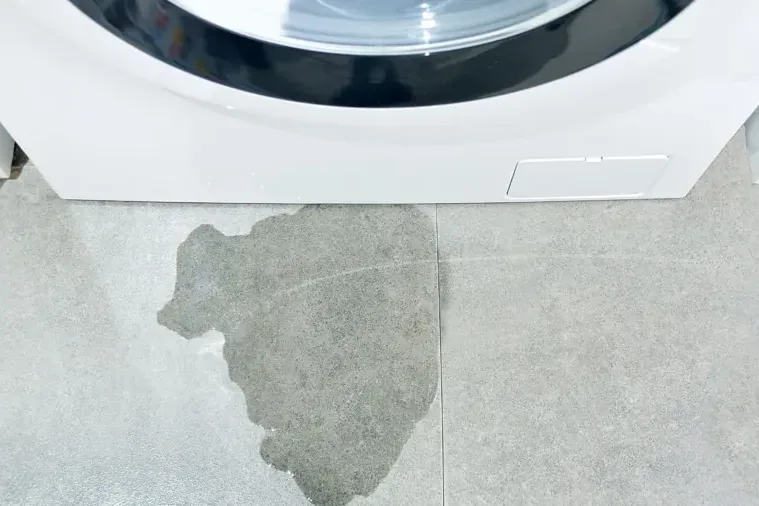
Expose only the supported moisture pockets
Cabinet bases or flooring may require limited access when readings stay high beneath the surface. Once the wet layer is reachable, dehumidification and directed airflow help remove retained moisture. Measurements at room edges track progress.
- Photograph the appliance position before movement.
- Note where water first became visible.
- Check cabinets on both sides.
- Inspect lower ceilings when applicable.
Closeout combines the service or repair record with the restoration file. Final values from flooring, cabinets, walls and any lower room confirm that the affected path was addressed instead of merely wiping the visible puddle.
A second perimeter pass occurs after the appliance is moved because its former footprint may reveal a different moisture pattern. Technicians also examine cabinet joints and the transition into the next room. These checks separate water that remained beneath the machine from moisture that migrated farther. The drying plan records those areas individually so a stubborn pocket does not disappear inside an average room reading.
Special attention goes to the narrow junction where cabinetry, flooring and wall finish meet after equipment movement.