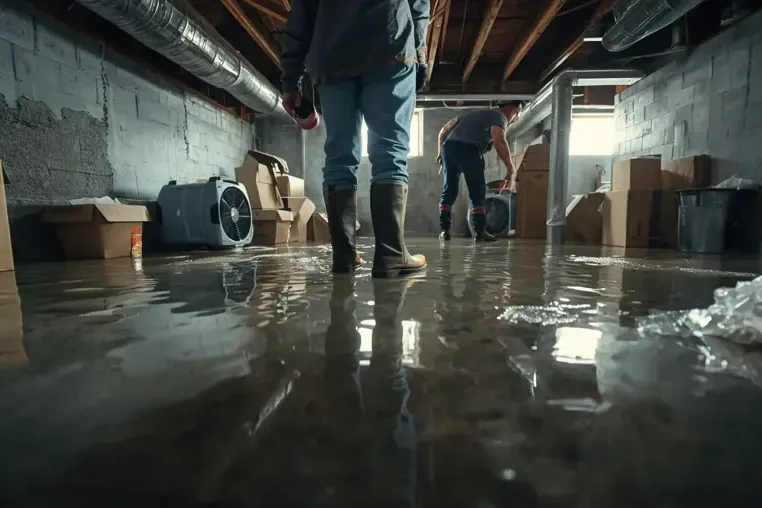
Roofs and pavement can concentrate rainfall into a smaller part of a property. City flood information for Vadnais Heights recommends reducing hard surface area, a useful starting point for examining how storm water moves outside and where it first reaches indoor material.
Key takeaways
- Watch the direction of roof and pavement runoff from a safe location.
- Find the first wet indoor edge instead of assuming the whole room has equal damage.
- Keep outdoor storm water separate from clean household spaces and contents.
- Pair bulk extraction with cleaning and a moisture map.
- Plan long term runoff changes after the immediate wet assembly is stable.
Hard surface area changes the path of rain
Rain that falls on soil or planted space follows a different path from water landing on a roof, driveway, patio, or other hard surface. The hard area can move water toward an edge quickly, especially where several surfaces direct flow to the same point.
The city recommendation to reduce hard surface area is a planning principle rather than proof that any individual surface caused a loss. A property inspection must still identify slopes, discharge points, openings, and the first wet building material.
A sketch should distinguish what was observed from what is proposed. An arrow showing rain movement is evidence from the event, while a note about changing pavement or planted space is a later option that still needs proper evaluation.
Begin outside while remaining clear of moving water and electrical hazards. Observe where roof discharge lands, where pavement ends, and whether water gathers beside a door, vent, wall joint, or other low opening.
- Draw the roof edges and paved areas on a simple sketch.
- Add arrows for the visible direction of runoff.
- Mark every place water gathers beside the building.
- Photograph the wider context as well as the entry detail.
Watershed facts provide context rather than a property verdict
The city lies in the Ramsey Washington Metro Watershed District and the Vadnais Lake Area Water Management Organization. Water in the latter watershed eventually flows to East Vadnais Lake.
Vadnais Lake is protected as a regional water source, and boating and swimming are not allowed there. Those facts show the importance of regional water management, but they do not determine the condition or flood exposure of a particular home.
Property specific conclusions require direct observation and appropriate mapping. The cleanup scope should rely on what entered the building, where it traveled, and which materials became wet.
A regional water destination also does not identify the source of an indoor puddle. Plumbing, roof entry, and surface runoff remain separate possibilities until observations connect one of them to the wet material.
Stop indoor spread before rearranging the room
Outdoor water can carry soil and debris. Keep occupants and animals away, define a controlled work area, and choose a dry location for contents before moving furniture or storage.
A wide photograph should capture the room as found. Closer views can then show the water edge, marks on walls or contents, and the apparent entry point.
This sequence preserves context before extraction changes the scene.
Storm and flood cleanup should use a protected route for equipment and debris. Wet tools and footwear should not pass through clean rooms without containment.
The town service hub provides another internal path to the available water damage services. It can be consulted from a dry area while the controlled zone remains closed to normal household traffic.
- Set a barrier at the entry to the affected room.
- Keep absorbent household cleaning tools on the dry side.
- Move salvageable items to a prepared clean surface.
- Seal wet debris before carrying it through the building.
Trace the first wet edge through the assembly
The first visible damp spot may sit at a door threshold or wall base, while water continues beneath a floor finish. Work outward from that point and compare each material with an unaffected reference area.
Inspect the opposite face of the entry wall, corners where trim hides gaps, fixed cabinet bases, floor transitions, and any room below. Surface appearance alone cannot show whether an enclosed layer holds moisture.
The inspection records the foundation, exposed plumbing and wet floor layers at the building. Those details determine where water can be recovered and which materials need access for drying.
- Mark the entry edge before water is removed.
- Check both faces of the affected wall when accessible.
- Compare floor transitions instead of sampling only the center.
- Record dry reference readings beside the wet map.
Extraction and cleaning prepare the area for drying
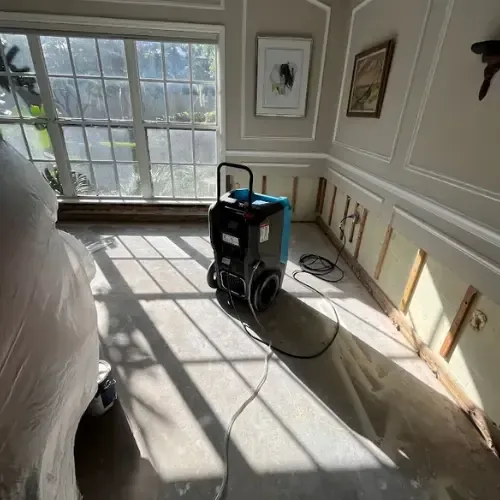
Bulk water removal comes after hazards are controlled. Workers clear accessible puddles, then focus on edges beneath movable contents, trim, and flooring where shallow water remains.
Because the source is outdoors, cleaning follows extraction. Soil and debris are removed, porous materials are evaluated for safe restoration, and hard surfaces receive a controlled cleaning pass before air movement begins.
Contents require the same orderly approach. Washable hard items can move through a cleaning station, while absorbent goods need a condition decision based on exposure.
Neither group should be placed against a wall that is still being monitored.
The sequence matters. Moving air across an untreated wet floor can spread residue, while placing drying equipment after cleaning supports evaporation from the material intended to remain.
Use drying evidence before making runoff improvements
Structural drying service uses mapped readings to follow water held inside floors and walls. Equipment can be adjusted as sections improve or as targeted access reveals a concealed damp area.
A durable exterior correction should wait until the actual entry path is understood. The answer may involve a roof discharge point, paved flow, grading, or an opening, but the evidence should identify the relevant feature rather than treating every hard surface as defective.
The final file can pair outdoor sketches and photographs with indoor extraction notes, cleaning records, readings, and repair recommendations. That connection helps the owner see both the immediate restoration and the later prevention work.
- Monitor identical material points during drying.
- Reposition equipment when the moisture map changes.
- Confirm the likely entry path before exterior work is selected.
- Keep prevention proposals separate from completed cleanup records.
Questions
Does the city recommend reducing hard surfaces?
Yes. City flood information recommends reducing hard surface area on a property. That principle can inform future planning, while the actual water entry path still needs a property specific inspection.
Does a watershed boundary show whether a home flooded?
No. A watershed district describes regional water management. An indoor inspection traces entry points, tests damp finishes and records which rooms need cleanup.
Why clean before starting air movement?
Outdoor storm water can carry soil and unknown residue. Bulk removal, debris control, porous material decisions, and hard surface cleaning should prepare the work area before controlled drying begins.
When should exterior runoff changes be planned?
Planning can begin after the entry path is documented, but the immediate priority is safe cleanup and drying. A later correction should address the feature supported by the evidence.