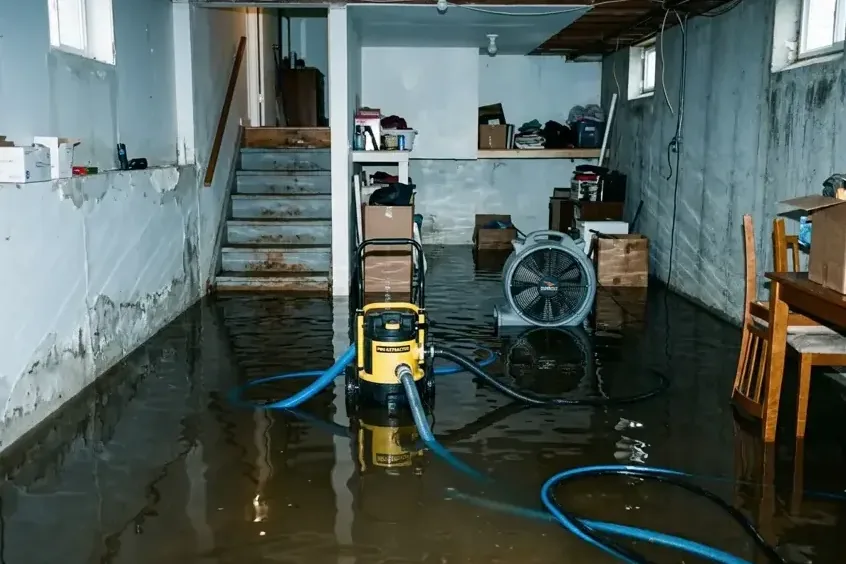
Snowmelt becomes a building problem when outdoor water finds a path inside. Maplewood Public Works notes that blocked storm grates can make snowmelt and rain pool in streets and yards, which gives property owners a clear reason to watch both drainage and indoor finishes during a thaw.
Key takeaways
- Observe outdoor flow from a safe location before entering any wet lower room.
- Report public drainage obstructions rather than entering moving water to clear them.
- Photograph the outdoor water path and the first indoor wet edge.
- Extract visible water, then inspect behind finishes and beneath floor coverings.
- Use repeat moisture readings to separate a dry surface from a dry assembly.
Start with an outdoor water sketch
A quick sketch can be more useful than a collection of unrelated photographs. Mark where meltwater is gathering, the direction it appears to move, the nearest building opening, and the first place moisture is visible indoors.
The observation should come from stable ground. A person should not step into moving water, reach into a covered grate, or stand where traffic cannot see the work area.
Public drainage concerns belong with the responsible public agency.
Maplewood Public Works is responsible for the municipal storm sewer system. The local system includes catch basins, force mains, lakes, lift stations, ponds, storm sewers, and wetlands, so a single visible grate is one part of a larger system.
Weather can change the sketch while work is underway. A photograph made during active pooling should be paired with another after the level changes, since the comparison can reveal a low edge or travel path that was hidden beneath the water.
- Photograph the grate and the wider pooling area.
- Mark the direction of visible surface flow.
- Note doors, windows, vents, and low finish edges nearby.
- Record the first indoor location where water appears.
Public drainage and private cleanup are different tasks
Street crews clear debris from storm sewers, and city information says those sewers are intended only for stormwater. A property owner can report an obstruction, but that action does not remove water that has already crossed into a building.
Inside, the priorities are occupant safety, source observation, contents protection, and water removal. An outdoor condition may continue changing during the thaw, so workers should monitor the entry point while treating indoor material.
During basement flood cleanup, the crew checks foundation openings, floor drains and the wet boundary around stored contents. The route into the room determines where pumping begins and which wall or floor layers need further inspection.
Protect the indoor boundary before moving contents
Set a clean staging area on a dry floor before carrying anything from the affected room. Without that boundary, wet boxes, tools, and footwear can transfer moisture and soil to spaces that did not need restoration.
Move contents only after initial photographs establish where they sat. Hard items may be cleaned and staged, while absorbent goods need a condition assessment.
Avoid stacking damp material against an unaffected wall.
Water from outdoors should be treated as contaminated because it may have contacted soil and debris. Gloves, appropriate footwear, and controlled debris handling protect occupants and preserve the clean side of the building.
- Choose one dry place for salvageable contents.
- Keep wet cardboard and fabric away from clean flooring.
- Use separate containers for debris and clean tools.
- Photograph each contents zone before it changes.
Extraction begins after hazards are controlled
Standing water can cover electrical cords, floor irregularities, and displaced objects. The affected area should remain closed until electrical exposure and walking conditions are understood.
Water extraction removes the bulk liquid from accessible floors. Workers then make slower passes at wall edges, floor transitions, cabinet bases, and other locations where a shallow layer can remain after the central puddle is gone.
The end of extraction is a new inspection point. With the reflective surface removed, staining, swelling, loose trim, damaged seams, and fine debris become easier to see and document.
- Keep electrical equipment outside wet access routes.
- Remove bulk water before detailed cleaning begins.
- Recheck perimeter edges after the central floor is clear.
- Update photographs when hidden damage becomes visible.
Local storm ponds do not answer an indoor moisture question
Stormwater treatment ponds reduce pollutants before water reaches area lakes. Retention basins manage runoff rates to reduce downstream flooding and erosion.
Those public functions provide important context, but they cannot establish whether a particular wall or floor is dry.
Most of the city lies in the Ramsey Washington Metro Watershed District. The northeastern area near Joy Park lies in Valley Branch Watershed District, while the western part lies in Capitol Region Watershed District.
Watershed boundaries describe management areas rather than the condition of an individual room.
The indoor answer comes from inspection and measurement. A moisture map should identify affected material, dry reference locations, and places where a finish blocks direct access.
This distinction also keeps the owner from waiting on a broad drainage answer while damp material remains indoors. Regional management and building restoration can proceed on separate tracks with records connecting the observations.
Dry what remains and correct the entry path
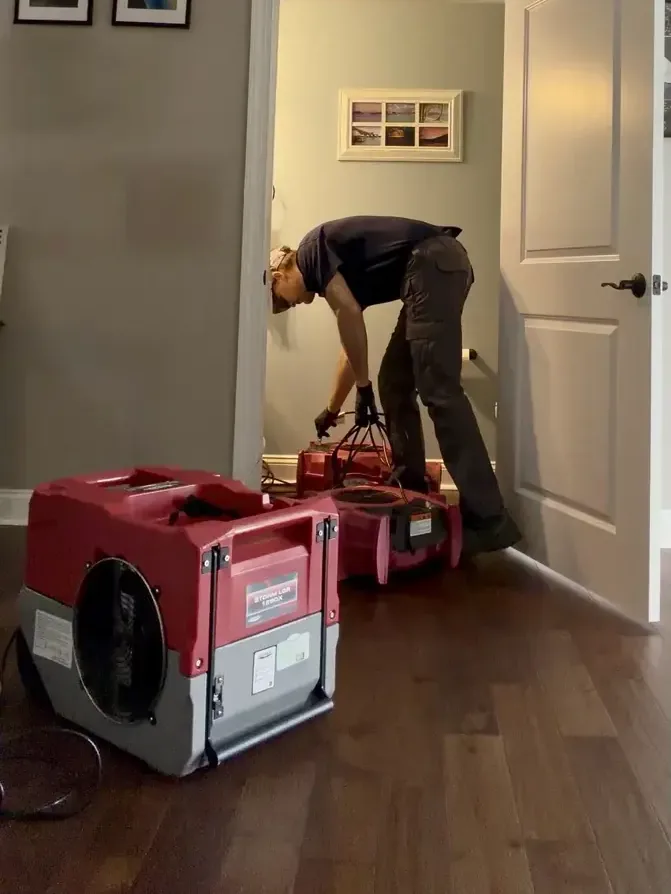
After cleaning, air movement and dehumidification can address moisture in materials that remain suitable for drying. Equipment should serve the mapped wet area, with attention to corners, floor edges, and opened cavities.
Structural drying is documented through repeat readings. If a section stops improving, the team should assess whether trapped material, limited access, or poor air movement is preventing evaporation.
The property owner can address the building entry path separately from the public grate report. Final records should keep those tasks distinct: outdoor observations, agency contact, indoor extraction, cleaning, material decisions, drying readings, and repair recommendations.
Drying records also help prevent a premature repair. New trim or floor finish should not cover an edge that still reads elevated, and a repaired opening should remain accessible until source correction has been checked under current conditions.
- Monitor the same points throughout drying.
- Keep equipment paths open and protected.
- Assess a stalled reading before adding more drying time.
- Confirm the entry correction before finish repair.
Questions
Should a resident clear a blocked public storm grate?
A resident should avoid moving water, traffic exposure, and unsafe debris. The obstruction can be photographed and reported to the responsible public agency while indoor safety and cleanup are handled separately.
Does a blocked grate prove why water entered a basement?
No. Pooling near a grate is an observation, but the building entry path must be traced from exterior conditions to the first wet interior material. Several paths can exist at once.
Why is snowmelt water treated as contaminated?
Outdoor meltwater can contact soil, road debris, waste, and other unknown material before entering. Cleanup therefore needs separation, protective equipment, material decisions, and surface cleaning.
What marks the end of drying?
Repeat readings at documented locations should meet the project goal and show that concealed areas were accessible for assessment. A room that feels dry is not enough evidence by itself.