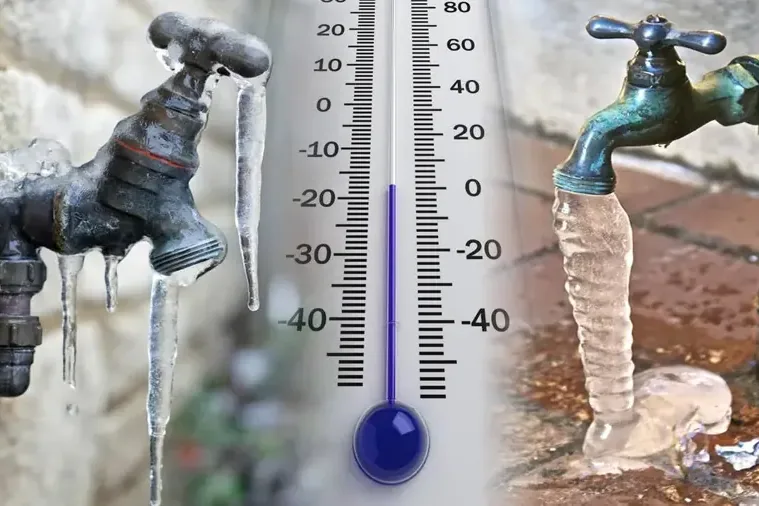
Deep cold turns ordinary access into the central problem. River Falls Municipal Utilities warns that pipes and meters become more susceptible after outdoor air remains below freezing for more than a few days, especially when daytime temperature does not rise above zero degrees.
Key takeaways
- Locate and test the interior water shutoff before severe cold arrives.
- Weak flow or a silent fixture calls for inspection of the supply pipe and nearby cold spaces.
- Close the supply before warming a suspected section whenever it is safe to do so.
- Inspect adjoining rooms and lower finishes after any release.
- Use moisture readings to decide where access and drying are necessary.
Turn utility advice into a cold weather routine
River Falls Municipal Utilities advises residents to locate and test the interior water shutoff before an emergency. That task belongs on a cold weather checklist because a valve hidden by boxes or stiff from disuse cannot help quickly when water is escaping.
Testing does not mean repeatedly operating fragile plumbing. It means identifying the correct valve, confirming that the approach is clear, and verifying its function under normal conditions with an appropriate professional if needed.
The utility also says customers are responsible for thawing and repairing water pipes inside the house. A resident who knows where the supply can be stopped is better prepared to coordinate the pipe work with frozen pipe water cleanup.
The local water damage service overview can help an owner separate source repair from restoration tasks. The plumber addresses the failed section, while extraction and drying deal with water that left the pipe and entered the building.
- Find the interior shutoff and keep its path clear.
- Label the valve in a way occupants can understand.
- Store a flashlight where it remains accessible during an outage.
- Know which qualified professional handles the plumbing repair.
Low flow is a clue with several possible causes
A fixture that slows or stops during deep cold deserves attention, but it does not identify the frozen location. The restriction may sit in an enclosed area, near an exterior surface, or elsewhere along the supply path.
Residents should compare fixtures without dismantling plumbing. Note which outlets have normal cold water, which have normal hot water, and which have changed.
Those observations help a plumber narrow the problem without treating every room as affected.
Write the observations down before conditions change. A short fixture list gives the plumber a clearer starting point and keeps uncertain recollections from becoming assumptions about the frozen section.
Avoid open flame and uncontrolled heating. A concealed pipe can begin leaking as ice releases, and a person focused on warming the section may not notice water moving into a wall or lower room.
The shutoff changes thawing from a gamble to a plan
Closing the building supply before a suspected pipe opens reduces the chance of a prolonged release. Once the source is controlled, a plumber can assess the section and restore water deliberately after the condition is understood.
The valve should only be approached through a safe, dry route. Standing water near electrical equipment, damaged ceilings, and unstable flooring are reasons to stop and bring in the appropriate professional.
If a break has already released water, burst pipe damage service can proceed while plumbing repair is coordinated. The source record and water path should be photographed before openings or repairs erase useful evidence.
- Close the supply from a dry and stable position.
- Open a fixture only as directed to relieve controlled pressure.
- Photograph the failed area before permanent repair.
- Restore the supply cautiously while the repaired section remains visible.
Follow water beyond the visible break
A release inside a wall may appear first at the baseboard, floor seam, or ceiling below. Water can also travel around a pipe penetration and emerge in a room that contains no plumbing fixture.
The inspection should expand in a deliberate order: source wall, opposite wall face, floor edge, adjoining space, and level below. A moisture meter can help define boundaries when surface appearance does not show the full path.
Local landmarks such as the Kinnickinnic River, Glen Park, and the University of Wisconsin River Falls describe the city, not a building assembly. No townwide foundation or pipe material should be assumed during the inspection.
- Look for lifted trim and changed paint sheen.
- Check cabinet bases and fixed storage beside the source.
- Inspect the ceiling and wall junction in the room below.
- Mark dry reference points as well as elevated readings.
Remove water before it spreads through finishes
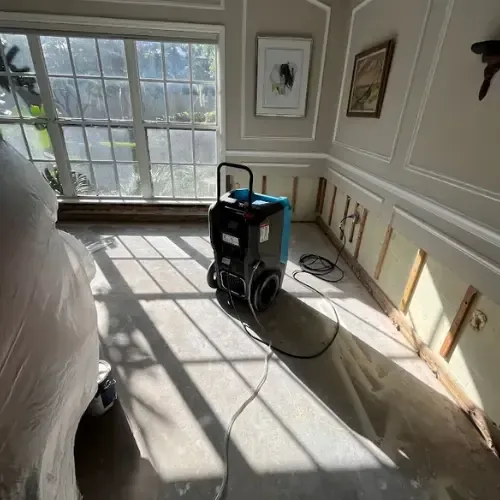
Surface water should be extracted from accessible areas once hazards are controlled. The crew then checks edges where liquid can hide beneath carpet, flooring, cabinets, and wall material.
Clean supply water does not make every wet material restorable. A finish that has separated, swollen beyond repair, or blocked access to wet insulation may need limited removal.
Material that remains stable and accessible may be dried in place when readings show steady progress.
The work zone needs separation from dry areas. Wet tools, removed material, and footwear should follow a controlled path so the cleanup does not create new damage in hallways or occupied rooms.
Use a drying record to finish the job
Drying is a comparison over time. Initial readings define the wet map, dry reference readings set context, and repeat measurements show whether the assembly is releasing moisture.
Equipment may need repositioning after a wall is opened or a floor edge is exposed. A section that changes slowly should prompt an assessment of access and airflow instead of an arbitrary extension based on the calendar.
The final record can pair plumber notes with the moisture map, photographs, removal decisions, and completion readings. That package explains how the source was repaired and how the building materials were returned to the documented goal.
- Map the same measurement points for every visit.
- Record equipment changes and the reason for each change.
- Inspect concealed areas before finish repair begins.
- Keep source repair and drying completion records together.
Questions
When are local pipes most susceptible to freezing?
Local utility advice identifies concern after outdoor air remains below freezing for more than a few days, with added attention when daytime temperature does not rise above zero degrees. Actual exposure still depends on the individual pipe location.
Why test the interior shutoff before winter?
A known, accessible valve lets an occupant stop new water when a frozen section opens. Finding a blocked or nonworking valve during a release can allow more material to become wet.
Can a resident use a flame to thaw a pipe?
An open flame creates a serious hazard and does not control the water that may escape as the ice releases. A qualified plumber can choose an appropriate method after the supply and pipe condition are assessed.
What proves the wall is dry after repair?
Repeat moisture readings at mapped points provide the evidence. The visible pipe repair stops the source, but surrounding insulation, framing, wall material, and floor edges require their own drying assessment.