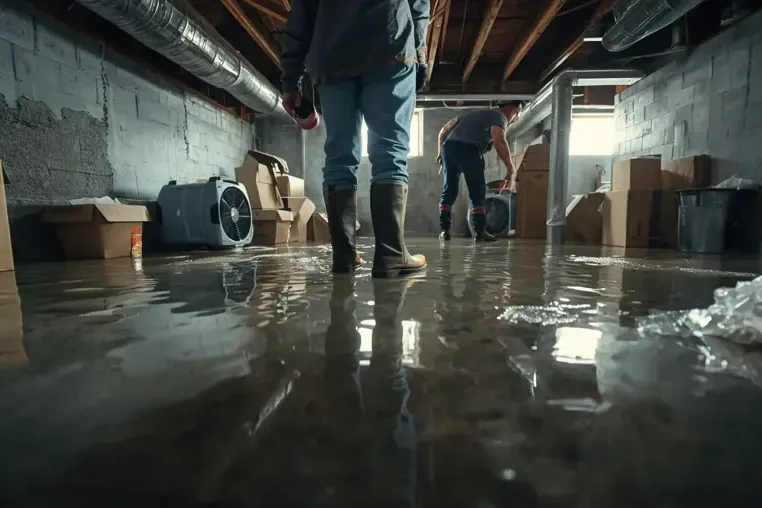
River water changes a familiar room into a set of urgent decisions. In Hudson, the St. Croix River setting and the Willow River border make a clear safety, documentation, extraction, and drying sequence especially useful when water reaches a building.
Key takeaways
- Keep people out when water may have reached electrical equipment or hidden hazards.
- Photograph the water edge, affected contents, and every room before items are moved.
- Treat water from outdoors as contaminated and avoid carrying residue into dry rooms.
- Extraction removes pooled water, while drying addresses moisture held inside materials.
- Track moisture readings and repair decisions so the work has a clear finish point.
Read the building before entering
The first useful action may be staying outside the wet area. Water can hide floor edges, loose objects, damaged finishes, and electrical hazards, so a person should not step into a room merely to learn how deep the water is.
A view from a dry doorway can answer several questions. Note whether water is still rising, whether the ceiling has changed shape, whether an appliance is surrounded, and whether the path to the electrical panel stays dry.
If the panel or its approach is wet, a qualified electrical professional should control the hazard.
Downtown Hudson and Old Town occupy the St. Croix River valley, while The Hill sits on higher bluffs. The crew checks exterior openings, water marks and the lowest affected rooms, recording the route before moving contents or starting extraction.
- Move children and animals away from the affected floor.
- Do not operate a wet switch, plug, appliance, or electrical panel.
- Use a dry doorway or exterior opening for the first photographs.
- Record whether water is entering, stable, or receding.
Separate river water from an indoor supply leak
The source changes the cleanup. A broken indoor supply pipe can often be stopped at a shutoff, while river water or storm runoff may continue moving through an exterior opening as conditions change.
Water from outdoors also carries soil and other material that clean supply water did not contain before it entered.
St. Croix River flooding threatened homes in 2001. When outside water reaches a room, sediment can remain beneath furniture and along wall bases after the level drops.
Cleanup follows that path through connected spaces and separates contaminated materials from clean belongings.
When outdoor water crosses the building boundary, storm and flood cleanup starts with containment. Workers establish a controlled route, keep tools from spreading residue, and identify porous contents that cannot be cleaned reliably.
- Look for silt, leaves, or a water mark near an exterior opening.
- Check whether a plumbing shutoff changes the incoming flow.
- Keep wet footwear and tools inside the controlled work area.
- Place salvageable contents on a clean surface away from damp walls.
Build a record before water removal
Photographs are most useful when they show context. Start with the room from the doorway, then capture the water edge, each affected wall, damaged contents, and any visible source.
A close image of one wet board is less informative without a second view showing where that board sits.
Create a written room list while the scene is still unchanged. Name the material, describe what is visible, and note whether an item was moved for safety.
Avoid deciding that hidden framing is dry or ruined from appearance alone.
Documentation should continue during water extraction. Images after pooled water is removed can reveal staining, lifted floor edges, softened wall material, and debris that the reflective water surface concealed.
- Take one wide image and several detail images in every affected room.
- List wet furniture, stored goods, floor coverings, and wall finishes.
- Preserve labels or identifying marks when an item must be discarded.
- Record each material opening and the reason it was needed.
Extraction reveals the real moisture boundary
Standing water is only the visible portion of the loss. It can move beneath a floor covering, enter the lower edge of wall material, wet insulation, and reach an adjoining room without leaving the same obvious surface puddle.
Extraction equipment removes bulk water so the crew can inspect those boundaries. The work proceeds from accessible pooled areas toward edges and transitions.
Workers then compare moisture readings in affected material with readings in appropriate dry material nearby.
A lower level may need a basement flood cleanup plan that separates cleanable hard surfaces from absorbent material exposed to outdoor water. Decisions should reflect contamination, physical damage, and the ability to reach all wet sides.
Dry the assembly rather than the room air alone
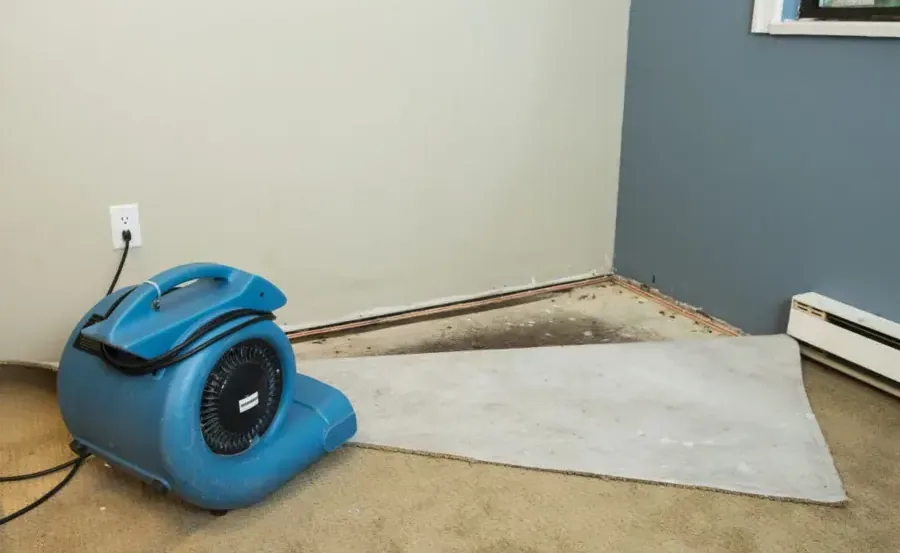
A room can feel comfortable while moisture remains inside its floor and walls. Air movement helps evaporation at an exposed surface, and dehumidification collects moisture released into the air, but both depend on access to the wet material.
Finish layers may need careful removal when they block inspection or trap contaminated water. The opening should be limited to what the evidence supports.
Removing everything creates needless repair, while leaving a sealed wet pocket prevents a defensible drying result.
The crew should map equipment placement, initial readings, daily progress, and the dry goal. Stable readings across the affected zone provide a better completion test than appearance, odor, or elapsed time.
- Expose wet material where a finish blocks evaporation.
- Keep air paths open around equipment and damp surfaces.
- Compare readings at consistent points during the project.
- Change the drying plan when a monitored area stops improving.
Plan repair only after cleanup evidence is complete
Repair planning begins with a clean moisture map. Contractors can then estimate finish replacement, plumbing work, an electrical assessment, or structural repair without covering unresolved damp material.
Hudson city permits cover building, electrical, plumbing, HVAC, and commercial work. The correct permit depends on the repair scope.
The emergency action is to make the wet area safe and prevent further damage; the later construction plan should identify which regulated work follows.
A final file can include before images, the room inventory, disposal notes, moisture records, equipment dates, and repair recommendations. That file gives the property owner a coherent account of what entered, what was removed, what dried, and what still needs reconstruction.
Questions
Can a property owner pump out river water immediately?
Only after electrical and structural hazards are considered and the water source is no longer creating an unsafe condition. Professional extraction also controls contaminated residue and reveals moisture that remains beyond the puddle.
What needs inspection after river water enters a building?
The crew checks entry points, sediment deposits, wet floor layers and wall cavities. Moisture readings establish the cleanup boundary, while contamination and material condition determine what can be cleaned and what needs removal.
What should stay out of the wet area?
People without protective equipment, electrical devices, clean storage containers, and items from unaffected rooms should remain outside the controlled area. That separation reduces exposure and prevents residue from spreading.
How is drying completion decided?
The decision should come from repeat moisture readings at mapped points, supported by access to all affected material. Readings beneath the finish and at adjoining edges confirm when concealed layers reach the drying goal.