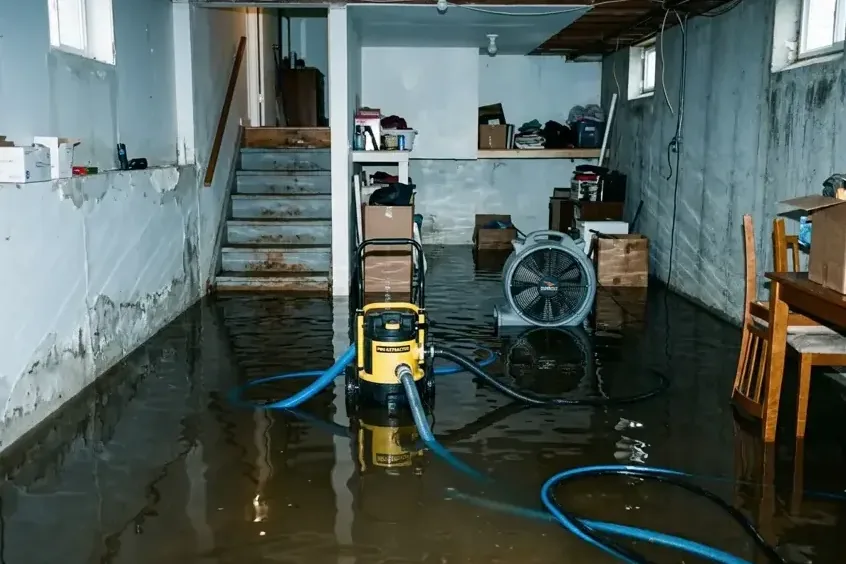
A wet basement creates work on two clocks. Safety, source control, extraction, and cleaning begin first, while permanent plumbing changes and finish repair require a defined scope. Hudson permits cover plumbing and building work, and basement finishing is among the projects that require permits.
Key takeaways
- Make the affected lower room safe before retrieving storage or operating equipment.
- Identify whether water came from plumbing, outdoors, or more than one source.
- Document and extract water before demolition removes evidence of the path.
- Use moisture readings to define the smallest necessary opening.
- Match permit questions to the final plumbing and rebuilding scope.
Keep emergency work and permanent repair in the right order
Emergency work prevents the condition from becoming larger. It includes restricting access, controlling an active source when safe, removing standing water, separating wet contents, and establishing a moisture map.
Permanent work corrects the failed pipe or drain and restores opened finishes. Combining both scopes too early can hide wet material behind a new wall or erase source evidence before the cause is understood.
A basement flood cleanup should therefore create a handoff point. The cleanup record identifies what became wet and what had to be opened; the repair plan identifies what will be replaced or changed.
Water extraction service can address the accessible liquid while trade contractors define permanent work. Keeping those assignments clear prevents a temporary source control step from being mistaken for a completed plumbing repair.
- Control the active water source when the route is safe.
- Photograph the room before moving stored contents.
- Remove pooled water and map concealed moisture.
- Write the repair scope after access reveals the condition.
Identify the source without forcing a quick conclusion
Plumbing water may appear beneath a fixture, at a wall base, or from a ceiling penetration. Outdoor water may leave debris near an opening or follow an exterior edge.
Both can occur during the same period, so one observation should not close the investigation.
Check whether a plumbing shutoff changes the flow. Look outside from safe ground for pooling and visible entry points.
Compare the smell, color, debris, and location while avoiding direct contact with unknown water.
No dominant foundation type or pipe material is confirmed citywide. The team should name the actual assembly and source found at the property instead of applying a broad local assumption.
The source description should stay precise. A wet wall calls for checks of nearby fittings, while outdoor pooling calls for inspection of thresholds and foundation openings.
Testing and direct access should resolve those questions before permanent correction is selected.
Create a useful record before finishes are opened
Start with wide room views, then photograph the source area, water edge, each affected wall, and damaged contents. A sketch can connect those images and preserve the route once water is extracted.
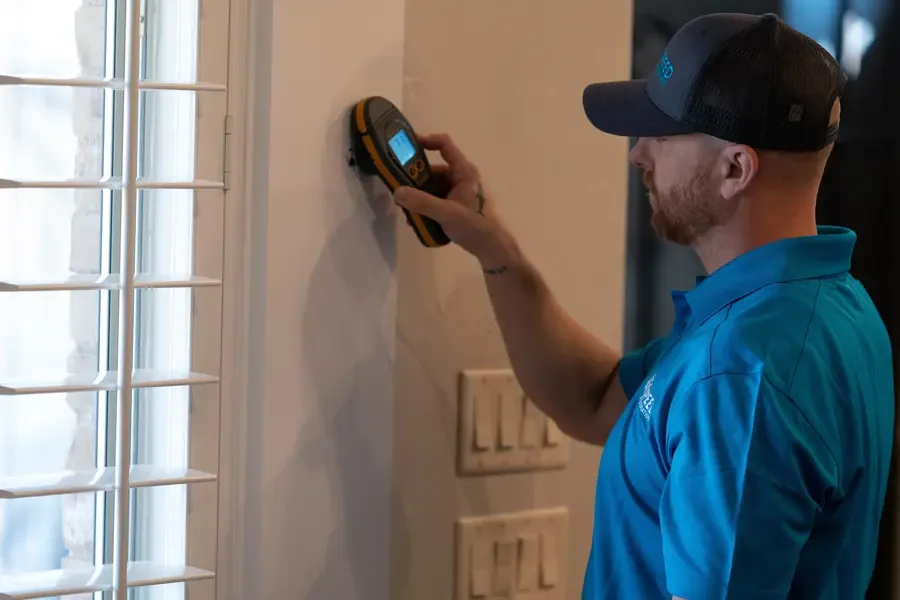
A moisture survey adds information that photographs cannot. Mark elevated readings at the wall base, floor transitions, cabinet edges, and lower ceiling areas.
Include dry reference locations for comparison.
If a plumber opens an area to reach the source, photograph the exposed condition before repair. That image can connect the failed component with the moisture pattern and explain why later drying access was needed.
- Use wide images to preserve room context.
- Label the source wall and every adjoining space.
- Map wet and dry readings on the same sketch.
- Record the purpose of each material opening.
Extraction reveals what can remain
Bulk water can hide floor damage and fine debris. Extraction removes the reflective surface and allows a closer assessment of seams, wall bases, carpet cushion, storage platforms, and utility areas.
Source cleanliness affects the next step. Clean plumbing water, outdoor flood water, and sewage do not share the same removal and cleaning decisions.
The crew should classify the observed source and revise the plan if new evidence appears.
Material condition also matters. A stable finish with useful drying access may remain, while swollen, separated, contaminated, or inaccessible material may require limited removal.
- Extract open floors before making finish decisions.
- Recheck edges beneath shelving and movable contents.
- Separate contaminated debris from salvageable items.
- Update the scope when the exposed condition differs from the first view.
Drying evidence determines when rebuilding can begin
A clean looking floor does not show the condition beneath it. Structural drying uses air movement, dehumidification, access, and repeat readings to manage moisture inside the remaining assembly.
Monitoring should return to the same points. If one wall section remains elevated, the team can assess insulation, finish layers, air access, and the possibility that the source is not fully controlled.
Rebuilding begins when the work area is clean, source repair is complete, and documented readings meet the project goal. Closing earlier can conceal a problem that was still measurable.
Hudson permits belong to the defined repair scope
City permits cover building, electrical, plumbing, HVAC, and commercial work. Basement finishing and plumbing changes are specifically among projects that require permits.
That does not mean the property owner should delay safe extraction while every repair detail is undecided. It means the contractor should identify regulated work before permanent plumbing changes are made or opened finishes are rebuilt.
A scope meeting is most productive after the wet materials are exposed and measured. At that point, the plumber can describe the permanent correction, the restoration contractor can identify drying access, and the rebuilding contractor can list the finishes that must return.
Each participant works from the same observed condition.
Permit documents should match that final description. If the scope changes after concealed damage is exposed, the contractor can address the new work before closure rather than relying on an earlier description that no longer fits.
The final project file should pair cleanup evidence with the repair and permit records. Photographs, moisture readings, plumbing findings, material decisions, and inspection documents create a clear sequence from discovery through restoration.
- Define the permanent plumbing change in writing.
- List electrical or HVAC work revealed by the opening.
- Confirm permit needs before finishes close access.
- Keep completed inspection documents with the moisture record.
- Compare the final repair scope with every opening shown in the cleanup photographs.
Questions
Must extraction wait for a plumbing permit?
Safe emergency water removal and permanent plumbing alteration are different scopes. Extraction can protect the building while the contractor defines the repair and addresses permits required for the permanent work.
Does basement finish replacement require a city permit?
City information includes basement finishing among projects that require permits. The contractor should match the permit question to the exact rebuilding scope before closing opened areas.
Why record moisture before opening a wall?
The initial map shows why access was needed and helps limit removal to supported areas. Readings after opening then reveal whether insulation, framing, or adjoining material also became wet.
When is the basement ready for finish repair?
The source should be corrected, affected surfaces cleaned, damaged material removed, and repeat moisture readings brought to the project goal. Repair should not cover an area that still lacks drying evidence.